
Signs It Is Time to Repaint Your San Diego Home: A Symptom-by-Symptom Walkthrough
Joe Penney has been painting in San Diego County since 2007 and in the trade for over 35 years. Every job — residential, commercial, and specialty coatings — is run by Joe or his son Alex personally. No subcontractors, no franchise crews. CA License #794402-C33.

Quick answer
The signs it is time to repaint a San Diego home are chalking, fading on the south and west walls, open or cracked caulk joints, paint peeling to bare stucco or bare wood, mildew on shaded elevations, and rust bleed on coastal metal. Exterior paint here lasts 7–12 years, but no calendar number is right for every house — the spread inside that range is set by exposure and prep, not by the paint. One honest symptom beats any schedule: a coastal house can be due at year seven while a shaded inland wall is still fine at year twelve.

Most people start looking for the signs it is time to repaint when the house finally looks bad from the street, and that is the wrong trigger. My work truck looks tremendous from the far side of the road at dusk. Up close, my fourteen-year-old would rather be dropped off at the corner. The curb is a generous critic, and your own stucco gets graded on the same curve every time you pull into the driveway. Paint stops protecting a wall long before it stops looking acceptable, and the gap between those two moments is where repaints get expensive.
So this is a diagnostic, not a schedule. Walk the house with it and you will be able to name what you are looking at, say what it means, and rank it as fix now, plan this year, or leave alone. We have been painting San Diego County since 2007, with 35+ years in the trade behind the crew, CA License #794402-C33, bonded and insured, and zero subcontractors — Joe or Alex runs the job and does the walk-around. Once you have decided you are due, which month to book belongs to our guide on the best time of year to paint an exterior in San Diego. This one only answers whether you are.
How often should you paint your house in San Diego?
There is no calendar number that is right for every house, and anybody who gives you one has not looked at yours. A properly applied exterior paint system in San Diego lasts 7–12 years, and the honest part of that answer is the spread. What moves a house from one end of that five-year band to the other is exposure and prep — not which can got opened.
Exposure is how much ultraviolet light, heat, salt and moisture a wall takes, and a south-facing stucco elevation in full sun is on a different schedule than an east wall shaded by a neighbor's eucalyptus on the same building. Prep is what happened under the last coat: whether the wall was washed, whether chalk was bound down or painted over, whether caulk joints were replaced, whether bare patches got primer. That work is invisible on day one and decides almost everything by year six. Our guide to paint brands and product lines makes the same argument from the product side.
So the useful question is not how old the paint is but what it is doing. A nine-year-old coating that is intact and shows no chalk has years left. A six-year-old coating that powders onto your hand is finished, whatever the invoice says.
Here is the opinion, and it is the reason to read the rest. The cheapest repaint you will ever buy is the one booked at first chalking, not the one booked at first peeling. The mechanism: UV breaks down the resin binder in a paint film from the surface inward, and chalking is that binder giving up while the color still reads fine from the sidewalk. At that stage the wall is still a wall, and the job is washing, spot priming, caulking and two coats. Wait for peeling and the substrate has been getting wet, so the job now includes surface work nobody budgeted for — and on wood it can mean work that is not a painter's to do at all. Same house, same paint, two different jobs, and the only variable was how long you waited.
Chalking: the rub test anybody can do
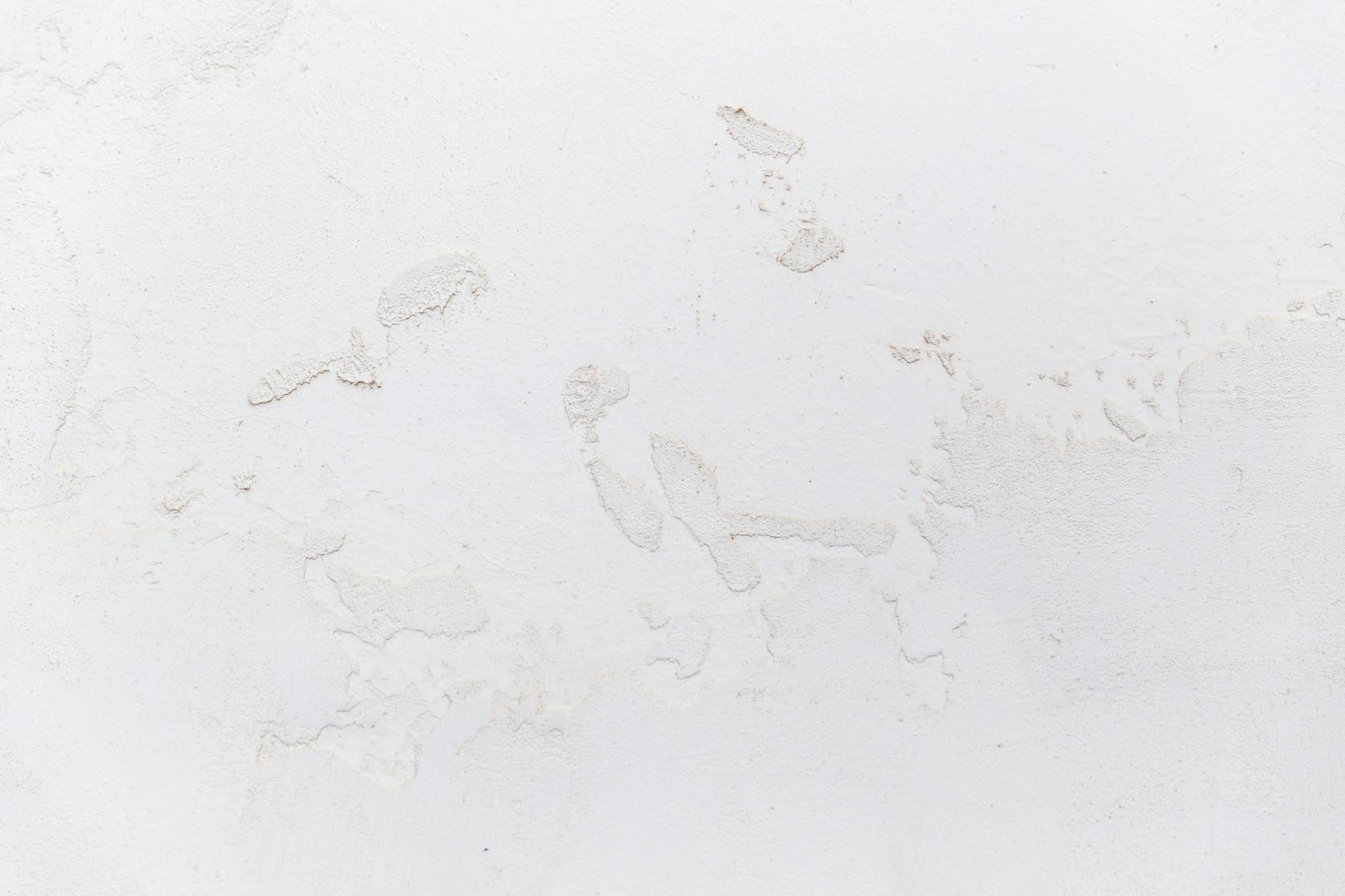
Chalking is the one symptom you can diagnose yourself in fifteen seconds, and the most reliable single indicator that a film has reached the end of its service life. Take a dark cloth — a navy rag, a black sock — wipe it firmly down a sunny wall in a straight stroke, then look at the cloth.
Fine pale powder on the cloth is your paint — pigment that has lost its binder. A paint film is pigment held in resin, and ultraviolet light degrades resin at the film surface over years of exposure. As the resin fails, the pigment it was holding is released as loose dust, which is why chalking shows up worst where the sun is hardest and usually arrives alongside a faded, flat look in the same spot.
Grade it by how much comes off. A light dusting on an older south wall is normal weathering, and tells you that you are into the back half of the 7–12 year window. Heavy powder that marks your hand, or pale chalk streaks running down the wall after rain, means the film is spent. Chalk has a practical consequence too: a new coating applied over it bonds to the dust rather than the wall, so a chalked surface has to be washed and, where chalk is heavy, sealed with a bonding primer first.
Urgency: plan this year. Chalk itself is not a leak. It is a clear signal that the coating has stopped protecting, and that the next thing to arrive is water somewhere it should not be.
Fading and color loss on the south and west
Fading is normal, gradual, and only diagnostic when it is uneven. Every exterior color goes lighter and flatter under San Diego sun, and because it creeps a little each season you stop noticing it. The way to see it is to find a spot the sun never reaches.
Take the cover off an exterior outlet, open a shutter that has stayed shut, or look at the wall behind a downspout. The paint under there is close to the color you chose. Hold it against the open wall two feet away and you have your answer without a fan deck. Then compare the south and west elevations against the north and east ones.
What fading means on its own is less than people assume: a film can be noticeably faded and still be sound, intact and adhered. What it tells you is where the UV load on your house is concentrated, which is useful for everything else on this list — the elevation that faded first will chalk first, crack first and fail first. Which colors hold their depth longest here is a separate question, and it lives in our guide to exterior paint colors for San Diego.
Urgency: plan this year if the faded elevations also chalk. Watch it if fading is all you found.

Hairline cracking versus cracking that means something
Fine hairline cracks in stucco are common in San Diego and usually cosmetic. Cracks with width, displacement or a pattern are a different conversation.
Hairline cracks are narrow enough to notice at arm's length and not from the sidewalk. They wander, they do not line up with anything, and the two sides sit flush. Stucco is a rigid cement product on a building that expands in inland heat and contracts overnight, so fine cracking is what it does. These get filled during prep and disappear under the topcoat, and on a heavily cracked older wall an elastomeric coating is the usual answer — a decision covered properly in our elastomeric paint for San Diego stucco guide.
Cracks worth taking seriously announce themselves differently. Wide enough to get a fingernail into. Running diagonally from the corner of a window or door. One edge sitting proud of the other, so you feel a step across it. Repeating across an elevation, or coming back in the same place after a patch. Tap near one and the stucco sounds hollow. Any of that is movement or water behind the surface, and painting it is painting over a symptom.
That is a line we hold at the estimate: if a crack reads structural we say so in writing and tell you it needs the right trade before anybody mixes paint. Where stucco is sound but damaged, patching and texture matching is ordinary work and sits inside our stucco repair service.
Urgency: watch it for true hairline cracking. Fix now for anything with width, displacement or a hollow sound.

Caulk failure at windows, doors and trim joints
Open caulk is usually the first real entry point for water on a San Diego house, and the symptom homeowners are least likely to go looking for. Paint gets inspected because it is the part you can see. Caulk sits in the shadow line of a window reveal where nobody looks.
Walk the perimeter and check every joint where two materials meet: window heads, jambs and sills, door casings, where trim lands on stucco, where stucco meets wood siding, and around vents, hose bibs and light fixture bases. Look for caulk that has split down its length, gone hard and crazed, pulled away from one side, or disappeared and left a gap. Press it with a thumbnail — sound caulk is rubbery, spent caulk is brittle and crumbles instead of giving.
The mechanism explains the urgency. A caulk joint is the flexible part of a rigid wall, there to absorb movement between two materials that expand at different rates. Sealants lose their plasticizers under years of sun and stop being able to do that, so they split at the moment they are needed. An open joint at a window head is gravity-fed: water runs along the head, finds the gap, and goes into the wall instead of down the face of it.
Urgency: fix now. This is the item most worth acting on out of sequence. Re-caulking a few joints is ordinary maintenance. Dealing with what water does behind a wall over two rainy seasons is not.
Peeling, blistering and flaking, and what the pattern tells you
Peeling means adhesion has failed, and the most useful thing you can do is look at what is under the piece that came off. That tells you whether the problem is the last paint job or the wall.
Peeling between coats leaves old paint visible in the bare spot — a different color, or the same color at a different sheen. The new film let go of the old one. Usual causes are a topcoat over chalk, over gloss that was not dulled, over a dirty wall, or over something still damp, and a surface can read dry to the touch without being ready, which our guide to paint dry and cure times works through. This is a prep failure, usually localized to wherever prep was skipped.
Peeling to bare substrate leaves raw stucco or bare wood showing. That is water, almost always, reaching the back of the film rather than landing on the front. Paint is more vapor-permeable than people think but it is not a membrane, and moisture pushing out from inside a wall lifts a coating off in sheets. Look up and around the failed patch for the source: a failed caulk joint above it, a sprinkler arc, a downspout discharging against the wall, a planter bed graded toward the house.
Blistering is paint lifting into bubbles while still attached around them. Pop one and look inside. Bare substrate means moisture drove it; old paint inside means heat did, commonly a dark color applied in direct sun on a hot inland afternoon, where the surface skinned over before the film underneath could release its water. The National Park Service keeps the clearest catalog of these patterns in its preservation brief on exterior paint problems. One caution: if your house predates 1978, the layers under flaking paint may be lead-based, and scraping or sanding them is regulated work under the EPA Renovation, Repair and Painting rule. Do not take a wire brush to it on a Saturday — ask whoever quotes the job how they handle it.
Urgency: fix now for peeling to bare substrate, starting with the water source. Plan this year for peeling between coats on an otherwise sound wall.
Mildew, dark staining and rust bleed
Both of these look like paint failure and usually are not. Both are also more common here than people expect: the marine layer keeps shaded walls damp into the morning, and salt air is hard on exposed metal.
Mildew and dark staining show up as gray, green or black patches, worst on north-facing elevations, under eaves, behind shrubs planted too close, and anywhere the sun does not reach by noon. Wipe a small spot with a diluted household cleaner. If the discoloration lifts, it is growth sitting on a coating that may be perfectly sound. If the surface stays dark, the stain has gotten into a degraded film and you are looking at a repaint rather than a wash. Either way it is a moisture and airflow signal, and cutting back the shrubs so the wall can dry does more than any product. On the next repaint, a washable sheen handles these elevations better than a flat one, a decision covered in our paint finishes and sheen guide.
Rust bleed appears as orange-brown streaks running down from a fixed point — under a window, below a railing bolt, from a line of nail heads in trim. The point is the diagnosis: a stain with a clear origin above it is corroding metal releasing iron oxide that rain carries down the wall. On coastal homes in Coronado and La Jolla this is routine, because chloride in the air accelerates corrosion on any fastener, railing or bracket whose coating has worn through. Painting over the stain without treating the metal wastes the coat — the source keeps corroding and the stain comes back through.
Urgency: watch it for mildew that washes off. Plan this year for rust bleed and for staining that does not clean up.
Soft or damaged wood at fascia, trim and window surrounds
This is the one item on the list that is not a painting problem, and finding it is the most valuable thing a walk-around does. Paint on wood is the first thing to tell you the wood is in trouble, and ignoring that signal costs more than anything else here.
Check where water sits or runs: fascia boards along the roof edge, the bottom few inches of trim and door casings, window sills and the joint beneath them, rafter tails, and anywhere a gutter has overflowed. Press firmly with a thumb, then with the blunt end of a screwdriver. Sound wood pushes back. Wood in trouble gives, stays dented, feels spongy, or lets the tool sink in. Other tells: paint cracked into small squares and lifted in one spot while the rest of the board is fine, dark staining spreading from a joint, open miters, soft end grain.
Here is exactly how we handle it, and the line does not move. We inspect it and we flag it in writing. Wood and framing repair — soft wood, rot, damaged fascia, anything structural — is work for a licensed carpenter or general contractor, not for a painting contractor, and we tell you that rather than put a coat of paint over it and hope. We paint once the surface is sound. When you hire that trade, check the license first: California's Contractors State License Board lookup is free, takes a minute, and is the same check you should run on us.
What we will not do is paint over it quietly, because fresh paint on soft wood looks finished for a season while hiding the problem from you and from anyone inspecting the house later. Our post on when not to hire a painter covers the broader version of that principle.
Urgency: fix now, and not with paint. Carpentry first, coating second.
Triage: fix now, plan this year, watch it
You will almost never find one symptom. A real walk-around turns up five or six at once, so the useful skill is ranking them. Anything that is a water path goes first, anything that means the coating is spent goes in this year's plan, anything cosmetic waits.
| What you found | Where it goes | Why |
|---|---|---|
| Open or cracked caulk at a window head or door casing | Fix now | A gravity-fed water path into the wall assembly |
| Paint peeling down to bare stucco or bare wood | Fix now | The substrate is unprotected and getting wet |
| Soft or spongy wood at fascia, trim or a sill | Fix now, by a carpenter | Carpentry has to happen before any coating |
| A sprinkler or downspout wetting the same wall daily | Fix now, at the cause | No coating wins against a nightly soaking |
| Stucco cracks with width, displacement or a hollow sound | Fix now, diagnose first | Movement or trapped water, not a surface problem |
| Heavy chalking across a whole elevation | Plan this year | The binder is spent and the film has stopped protecting |
| Rust streaks from fasteners, railings or fixtures | Plan this year | Corroding metal, and the stain returns through new paint |
| Clear fade on the south and west walls only | Plan this year | Normal UV wear, and a warning about the rest |
| Fine hairline cracking in stucco, edges flush | Watch it | Common on San Diego stucco and usually cosmetic |
| Mildew on a shaded wall that wipes off | Watch it | Surface growth, not necessarily a failed coating |
| Sound film, dated color | Watch it | A preference rather than a condition |
Two things fall out of that table. Several fix-now items are not paint jobs at all — they are a carpenter, a gutter, or twenty minutes with the sprinkler timer. And three or more plan-this-year items across different elevations means you are due for a full repaint rather than a list of repairs, which is cheaper than chasing symptoms one at a time. What that job involves is in our exterior painting cost guide.
Coastal and inland clocks, and why south and west fail first
Two houses the same age with the same paint on them can be fifteen miles apart in San Diego County and three years apart in condition. The published 7–12 year range covers both, and where a house sits inside it mostly comes down to which side of that divide it is on.
Coastal homes come due sooner. Three loads stack up near the water: airborne salt settles on surfaces and holds moisture against them, so walls stay damp longer than the weather suggests; the marine layer keeps shaded elevations wet into mid-morning for months, which favors mildew; and chloride attacks exposed metal, which is why rust bleed is a coastal symptom. A house in La Jolla or Coronado tends to show chalking, mildew and rust staining in that order, and earlier.
Inland homes fail differently. In La Mesa, El Cajon and Santee the problem is not salt, it is movement and UV. Summer afternoons put real heat into a stucco wall and overnight cooling takes it out again, and that daily expansion and contraction produces thermal cracking. Fade and chalk concentrate on the south and west faces while a shaded north elevation looks nearly new, so inland the diagnosis is usually cracking plus one or two blown-out elevations rather than a whole house going at once.
South and west fail first because they take the most ultraviolet energy across a day, and UV degrades the resin holding a film together. West walls get a second penalty: their peak load lands in the afternoon when the wall is already hot, so the film is broken down and thermally cycled at once, and low afternoon sun strikes a vertical wall closer to square than midday sun does.
Which raises the obvious question: is repainting only those faces reasonable? Sometimes, genuinely — the FAQ below covers the three cases where it turns into a false economy. It works when the failing elevation ends at a corner or a change of material and the rest of the house tests sound. We quote two walls when two walls is the honest answer.
When you should not repaint
This is the section that costs us work, and we write it anyway. Four situations where the answer is to leave the paint alone or spend the money somewhere else.
- The coating is sound and you are tired of the color. If the rub test is clean, the caulk is flexible, nothing is peeling and the film is intact, you do not need a repaint — you want one. That is a legitimate reason to paint a house, and worth being clear about, because a want can wait for the right month and the right color. If that is where you are, start with our exterior color guide rather than with a condition report.
- The real problem is a sprinkler or a drainage issue. This is the most common localized failure we see in San Diego and it rarely needs a painter. A head throwing against the same three feet of stucco every evening, a downspout discharging at the base of a wall, a planter bed graded toward the house — any of those takes out a patch of paint over and over, and a repaint over an unfixed cause fails in the same spot. Fix the cause, then talk about paint.
- There is active moisture intrusion or damaged substrate nobody has dealt with. If a wall is wet, a roof is leaking, or there is soft wood at the fascia, paint is the last step and not the first. Coating a damp or compromised surface traps the problem and guarantees the failure returns, and makes the condition harder for you or a future buyer to see. Get the water stopped and the carpentry done by the licensed trade that does carpentry. We will paint it after, and we will say so in writing before anybody starts.
- You are selling in two months. Be honest about the math. A full exterior repaint on a short timeline rarely returns what it costs at closing, and rushing it is how you end up with a job a buyer's inspector can read. Washing the house, cleaning the mildew off the north wall, re-caulking the windows and touching up the trim presents far better for the money. Ask us which surfaces are worth doing before a listing — the answer is frequently fewer than you think.
The short version: the signs it is time to repaint are things you can see and test yourself, and the calendar is the least reliable of them. Rub a dark cloth down a sunny wall, press a thumbnail into the caulk at a window head, look under the paint that is peeling, press a thumb into the fascia. That ten-minute walk tells you more than the invoice date on the last job. For questions about exterior painting, stucco prep, or anything else in our list of services across San Diego County, call us directly. No forms, no hold music — Joe or Alex on the line. We have been doing this in San Diego since 2007 and we will tell you the same thing we just wrote, including when the answer is that you are not due yet.
FAQ
What is the chalk rub test, and how do I do it?
Wipe a dark cloth firmly down a sunny exterior wall in a stroke of a foot or two, then look at the cloth. Fine pale powder on it is chalking: pigment that has lost its binder because ultraviolet light broke the resin down at the film surface. A light dusting on an older coating is normal weathering. Heavy powder that marks your hand means the film is spent, and that the wall has to be washed and, where chalk is heavy, sealed with a bonding primer before any new coating goes on. It is the most reliable at-home test for whether an exterior is due.
Can I repaint only the sun-damaged side of my house?
Sometimes, and it depends on whether there is a clean place to stop. A partial repaint works when the failing elevation ends at a corner or a change of material, the other elevations test sound on the rub test and at the caulk joints, and the color is a current product that can be matched. It is a false economy in three cases: the rest of the house is only a year or two behind, a new film would have to die out in the middle of a flat wall, or the existing color has faded enough that nothing matches it cleanly.
Does peeling paint mean the last painter did a bad job?
Not necessarily, and the piece that came off tells you. If old paint is visible under the failed area, a different color or a different sheen, the new film let go of the old one and that usually traces back to prep — paint over chalk, over gloss that was not dulled, or over a dirty or damp wall. If the bare spot shows raw stucco or bare wood, the cause is almost always water reaching the back of the film from a failed caulk joint, a sprinkler or grading, and no painting survives that.
Does mildew on a shaded wall mean the paint has failed?
Usually not. Wipe a small area with a diluted household cleaner. If the gray or black lifts, it is growth sitting on a coating that may be perfectly sound, and the real fix is drying the wall out by cutting back shrubs planted tight to the house. If the surface stays dark after cleaning, the staining has gotten into a degraded film and that elevation is due. Mildew on shaded coastal walls is a moisture and airflow signal first, a paint signal second.
What do rust streaks running down the stucco under a window mean?
They mean a piece of metal above the streak is corroding and rain is carrying iron oxide down the wall. The origin point is the diagnosis: a fastener, a railing bolt, a window frame component, a light fixture base, or a line of nail heads in trim. On coastal homes this is routine, because chloride in the air accelerates corrosion wherever a coating has worn through. Painting over the stain without treating the metal wastes the coat — the source keeps corroding and the stain comes back through. The metal gets taken back, treated, primed with a rust-inhibiting primer, then topcoated.
Does a sprinkler hitting the same wall every night really matter?
Yes, and it is one of the most common causes of localized paint failure we see in San Diego. A head throwing against the same few feet of stucco every evening keeps that area wet overnight, drives moisture into the wall, and pushes the coating off from behind, which is why the failure is a patch rather than a whole elevation. It often arrives with mineral staining as well. Adjust or move the head before you repaint, because a new coating over an unfixed cause fails in the same spot.
How do I tell normal weathering from paint that has actually failed?
Normal weathering is gradual, even across an elevation, and the film is still doing its job: some loss of color depth, some loss of sheen, maybe a light chalk on the sunny side. Real failure is loss of adhesion or an opening in the film — peeling, blistering, flaking, split caulk, heavy chalk that marks your hand, or staining that will not clean off. The practical test is whether anything gives water a way in. Faded but intact can wait. A path to the substrate is failure, whatever it looks like from the street.
How urgent is cracked caulk around my windows?
It is the most urgent item on a typical list and usually the cheapest to deal with. A caulk joint is the flexible part of a rigid wall, and when sun has taken the plasticizers out of it the sealant splits at the point it was there to protect. An open joint at a window head is gravity-fed, so water runs along the head and into the wall assembly instead of down the face, and you often see the result as interior staining before anything shows outside. Press a thumbnail into the joint: rubbery is fine, brittle and crumbling needs cutting out and replacing — ordinary maintenance rather than a repaint.
Penney's Professional Painting — exterior, interior, cabinet and commercial painting across San Diego County since 2007. CA #794402-C33, bonded and insured, zero subcontractors.
We will walk your elevations, run the rub test with you, and tell you in writing which walls are due, which can wait, and which problems belong to another trade before anybody paints. Estimates are free.
Walk the job with Joe or Alex.
Tell us what you're thinking. We'll come look, point out what we'd do differently, and only quote what we'd paint in our own house.