
Paint Finishes and Sheens in San Diego: Which One for Which Surface
Joe Penney has been painting in San Diego County since 2007 and in the trade for over 35 years. Every job — residential, commercial, and specialty coatings — is run by Joe or his son Alex personally. No subcontractors, no franchise crews. CA License #794402-C33.
Quick answer
Paint finishes run flat, matte, eggshell, satin, semi-gloss, gloss, and the whole decision is one trade-off: the shinier the finish, the harder and more washable the film — and the more it shows every flaw underneath. For most San Diego homes that means eggshell on living rooms and bedrooms, satin in bathrooms and hallways, semi-gloss on trim and doors, flat or low-sheen on stucco, and satin on wood siding. Coastal humidity moves you up a step. Hard inland sun on a south wall moves you back down one.
Paint stores name their finishes the way a diner names eggs. Flat, matte, eggshell, satin, semi-gloss. My son, who is fourteen and deeply invested in not being seen with me, has never forgiven me for asking a waitress for two eggs in eggshell and then laughing at my own joke for most of a Sunday. She did not laugh. He still brings it up. The list is genuinely confusing though, and unlike breakfast, you live with the answer for years.
This guide is about picking a sheen for a San Diego home, and only that — not what a repaint costs, not which coating belongs on failing stucco, not what color to choose. We have written all three and linked them where they belong. What you will walk away with is a sheen for every surface in the house, interior and exterior, plus a straight answer on when primer is actually required instead of merely sold to you. We have been painting San Diego County since 2007, with 35+ years in the trade behind the crew and zero subcontractors.
What a paint sheen actually is
Sheen is how much light the dried paint film bounces back at you, and it is set almost entirely by the ratio of binder to pigment in the can. Binder is the resin that forms the film. Pigment is the solid that gives color and hide. Load a paint with pigment and the dry surface is microscopically rough and open, so light hits it and scatters in every direction. That reads as flat.
Add binder and the film closes up and levels out. Light that lands on it reflects the way it would off water, mostly in one direction, and your eye reads that as shine. That is the entire mechanism, and every consequence in this guide falls out of it.
Because it is a resin story rather than a marketing story, sheen brings durability along with it. A binder-rich film is tighter and harder, so it resists scrubbing and sheds fingerprints. A binder-poor film is porous, so dirt settles into the open surface instead of sitting on top of it, and scrubbing polishes the spot rather than cleaning it — which is why a washed patch on a flat wall ends up shinier than the wall around it.
The second consequence is the one nobody warns you about. Directional light is unforgiving light. When a film returns light in one direction, every bump, seam, nail pop, sanding scratch and lump of joint compound throws its own small shadow across the wall. Scattered light hides all of it. This is why the same wall can look flawless in flat and look like a topographic map in semi-gloss, with no change to the wall at all.
Sheen is measured on a gloss meter at a fixed angle, and manufacturers do not all use the same angle or the same cut-off between one band and the next. Treat the names as a rank order, not as specifications. One company's satin genuinely is shinier than another's.
The six paint finishes, flat to gloss
Six bands, lowest reflectance to highest. Each one exists because it is genuinely the best answer somewhere, including flat, which gets more abuse than it deserves.
Flat. No shine at all. The best hider of surface flaws there is, and the reason ceilings and older textured walls get it. Least washable of the six. Modern premium flats clean up far better than the flats of twenty years ago, but the physics has not moved.
Matte. A hair above flat, and on many product lines the two names get used interchangeably. Most manufacturers put their scrubbable low-sheen wall paint here — nearly the hiding power of flat with meaningfully more cleanability. If you love the look of flat and have a family, this is the compromise.
Eggshell. A low, soft lustre, roughly like the shell of an egg. The default interior wall finish in most of the homes we paint, because it hides ordinary drywall well and takes a wipe without complaint.
Satin. A visible, smooth sheen. Noticeably tougher and more washable than eggshell, and noticeably less forgiving of a wall that is not flat. Bathrooms, kitchens, hallways, and most exterior siding live here.
Semi-gloss. Clearly shiny, hard, and made to be cleaned repeatedly. Trim, baseboards, doors, door casings, window casings, cabinets, and any surface that gets touched by hands rather than looked at from across a room.
Gloss. Full shine, hardest film, easiest to clean, and merciless about substrate. Front doors, metal railings, gates, ironwork, and specialty work. On a wall it is a statement, and it needs a wall prepared like furniture to survive being one.
| Finish | Washability | Hides flaws |
|---|---|---|
| Flat | Lowest | Best — hides almost everything |
| Matte | Low to moderate | Very good |
| Eggshell | Moderate | Good on ordinary drywall |
| Satin | Good | Fair — starts showing seams |
| Semi-gloss | High | Poor — shows prep quality |
| Gloss | Highest | Worst — shows everything |
The trade-off: durability against every flaw in the wall
Every sheen question is the same question wearing a different hat. How much abuse does this surface take, and how good is the surface underneath. Answer both and the finish picks itself.
A wall in a formal dining room is looked at, not touched. It can afford flat or matte, and it will look better in them. A wall in a hallway is dragged along by backpacks, dogs, grocery bags and shoulders. It needs to be washable, and that means giving up some of the forgiveness.
The catch is that the two requirements often live in the same wall. An older La Mesa house with wavy plaster in a narrow hallway wants flat for the plaster and satin for the traffic, and it cannot have both. When that happens, fix the wall rather than the paint. Skim, sand, and prime the worst of it so it can carry a higher sheen, or accept a slightly livelier wall in exchange for one you can actually clean.
Here is the opinion, and we will defend it. On an interior repaint, the sheen decision does more for how the job looks in year five than the brand on the can does. We specify Benjamin Moore, Sherwin-Williams and Dunn-Edwards, and the difference between their good lines is real but modest. The difference between flat and satin in a hallway with two kids in it is not modest at all — it is the difference between a wall you sponge clean and a wall that has absorbed five years of handprints into a porous film, where every attempt to wash it burnishes a shiny patch. Same paint, same painter, same budget. Different sheen.
Interior paint finishes, room by room
Eggshell on most walls, satin where water and hands are, flat on ceilings, semi-gloss on trim. That covers ninety per cent of the houses we walk into. The detail is in the exceptions.
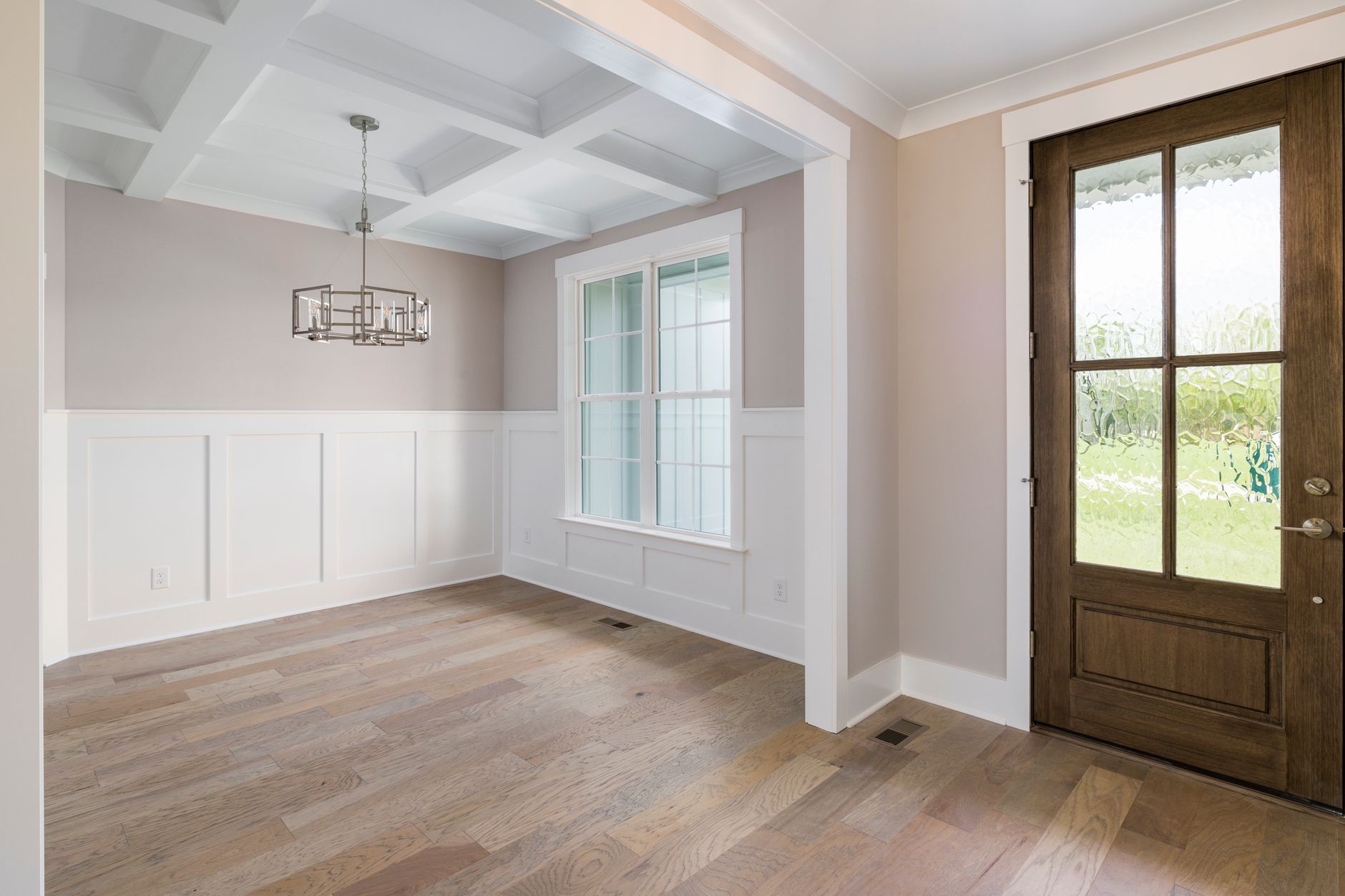
Living rooms, dining rooms, bedrooms. Eggshell. Enough lustre to wipe a scuff, enough softness to keep a long wall reading flat and even. Matte is a good call in a bedroom with older or patched drywall, or in a room with a big window throwing raking light down a wall, because raking light is where sheen goes to embarrass you.
Kitchens. Satin on the walls. Cooking puts a fine grease film on everything within reach of the range, and grease comes off satin and does not come off eggshell without a fight. Behind and beside the range especially.
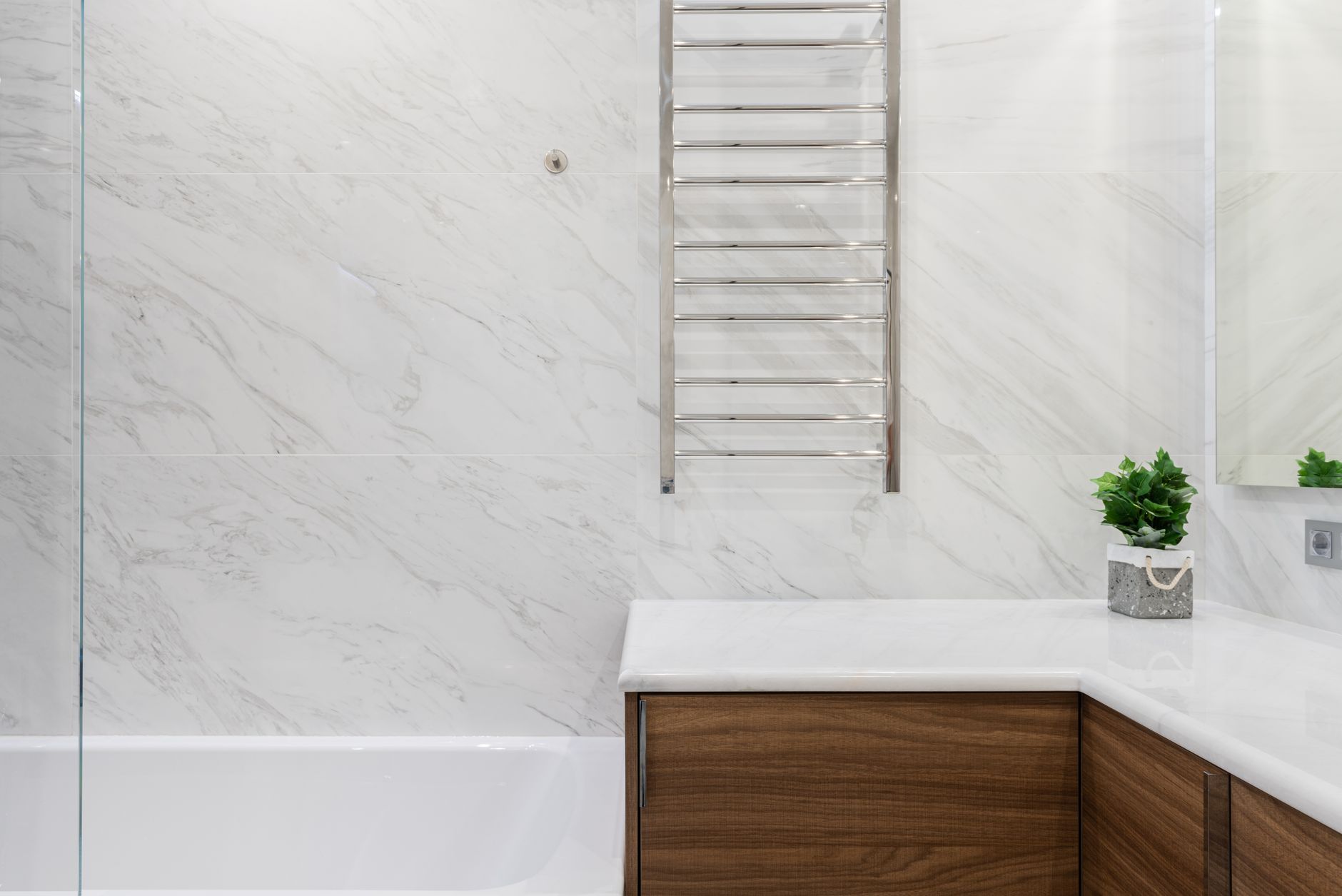
Bathrooms. Satin, and use a paint formulated with a mildew-resistant additive. Bathrooms are the one interior room where a San Diego coastal address genuinely changes the specification, which is its own section below.
Hallways, stairwells, entries, kids' rooms, laundry. Satin, or eggshell at the very least. These are contact surfaces. Treat them the way you would treat a kitchen and you will not repaint them on their own in three years.
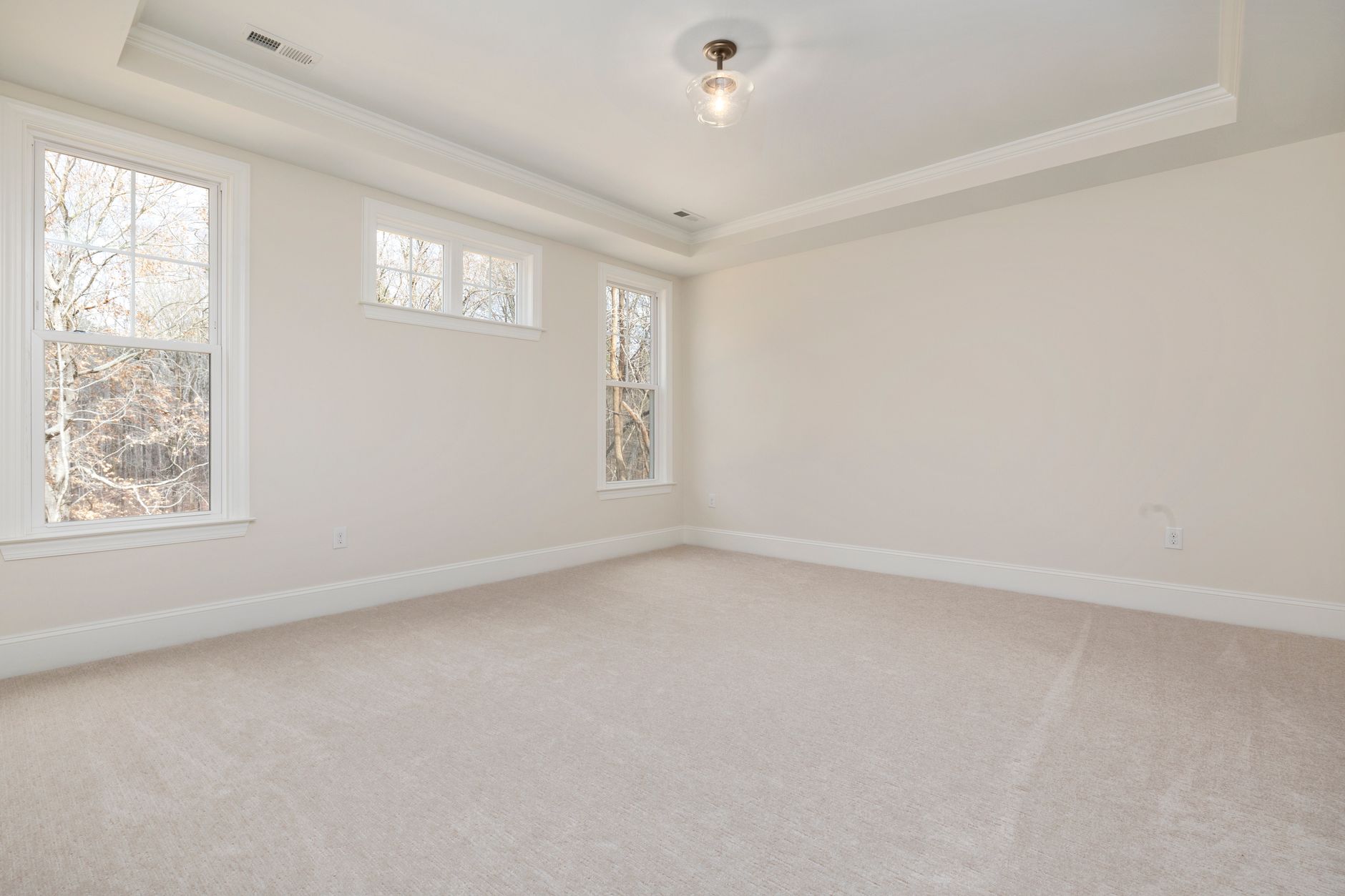
Ceilings. Flat, essentially always. A ceiling is the largest uninterrupted plane in any room and it is lit from below and from the side, which is the worst possible angle for showing drywall seams and taping. Flat scatters that light and the ceiling disappears. The exception is a bathroom ceiling, where moisture beats vanity.
| Room or surface | Sheen | Why |
|---|---|---|
| Living, dining, bedrooms | Eggshell | Wipeable, still forgiving on ordinary drywall |
| Kitchen walls | Satin | Airborne grease releases from a tighter film |
| Bathroom walls | Satin | Moisture and mildew; needs real washability |
| Bathroom ceiling | Satin or matte | Steam beats the flat-ceiling rule |
| Hallways and stairwells | Satin | Contact surface, cleaned often |
| Ceilings elsewhere | Flat | Hides seams under raking light |
| Trim, doors, baseboards | Semi-gloss | Hands, shoes, vacuum cleaners |
| Cabinets | Satin or semi-gloss | Daily contact, needs a hard film |

Everything above assumes the walls get prepped properly first, which is most of what an interior repaint actually is. Our interior painting page covers the prep sequence, and the interior painting cost guide covers what it comes to.
Trim, doors, and cabinet sheen
Semi-gloss on trim, doors and baseboards. Satin or semi-gloss on cabinets. Trim is the one place where a step up in sheen is doing two jobs at once, and both of them are worth it.
The first job is durability. Baseboards get vacuumed into, kicked, and mopped against. Door edges and casings are touched thousands of times a year. A semi-gloss film survives that and cleans with a damp cloth instead of a repaint.
The second job is visual. Trim in a higher sheen than the wall separates the two even when they are the same color, because the shine draws a crisp line where wall meets casing. That reads as deliberate. Trim in the same sheen as the wall reads as unfinished.
Gloss on trim is a real option and an aggressive one. It looks superb on well-built millwork in an older Coronado or Mission Hills house, and it is punishing on cheap finger-jointed pine, where every joint and filled nail hole announces itself. Look closely at what you actually have before you commit.
Cabinets. Satin or semi-gloss, and the choice between them is honest preference rather than performance. Both are hard enough for daily use when the coating is a proper cabinet product rather than wall paint. Satin is the current look and hides door and rail imperfections better. Semi-gloss cleans marginally more easily around handles and above the range, and suits a traditional kitchen. Full gloss on cabinets is rare outside of a deliberately lacquered look, and it requires a substrate finished to furniture standard.
What matters more than the sheen number on cabinets is what is under it and how it is applied — degreasing, sanding, the right bonding primer, and a sprayed finish. Our kitchen cabinet refinishing guide covers that process and what it involves; this post stops at the sheen.
What sheen for exterior paint, surface by surface
Outside, the answer is usually satin, with flat or low-sheen on stucco and semi-gloss or gloss on anything metal. Exterior sheen is decided by two things interior sheen never has to think about: how much dirt the surface collects, and how hard the sun hits it.
Stucco. Flat or low-sheen for the body. San Diego stucco is textured — sand, lace, dash, knockdown — and texture plus shine is a bad pairing in bright light, because thousands of small raised edges each catch the sun and the wall starts to sparkle unevenly. Flat also hides patching and hairline cracking far better, and there is a lot of both on a twenty-year-old stucco elevation. On a low garden wall that gets leaned on and hosed, step up to satin on that section only.
Wood siding, shingles, and board and batten. Satin. Wood moves, wood collects dirt, and wood needs a film that sheds water rather than drinking it. Satin gives you that without the glare a semi-gloss would put on a large plane. Flat on wood siding is a maintenance problem — it holds dirt and coastal grime and cannot be washed off.
Trim, fascia, and rake boards. Satin or semi-gloss, a step above the body. Semi-gloss sheds water at the horizontal surfaces where water sits, which is exactly where exterior paint fails first. Fascia boards and window sills take standing water and dew, and the marine layer supplies dew for months at a time.
Front doors. Semi-gloss or gloss. Doors are small, prepped well, touched constantly, and worth the shine. Sun exposure is the caveat and it has its own answer below.
Metal, railings, gates and wrought iron. Gloss or semi-gloss over a rust-inhibiting primer. A hard, tight, glossy film is what keeps water off steel, and there is no aesthetic argument strong enough to override that near the ocean.
None of this settles which coating system belongs on your walls — acrylic, elastomeric, or a repair-first approach on a wall that is already failing. That is a separate decision, and our elastomeric paint guide makes it. Sheen is also not color; if you are still choosing color, the exterior paint colors guide is the one you want. Exterior paint in San Diego lasts 7 to 12 years, so both decisions are worth a week.
Exterior satin paint, and why it is the default here
Exterior satin paint is the most-specified sheen on the outside of a San Diego house because it sits at the point where washability, water shedding and fade resistance all still work and glare has not started yet. It is the compromise that wins most arguments.
The washability matters more here than most people expect. Coastal air deposits a fine salt and grime film on everything, and the further south and west your elevation faces the more road dust and pollen joins it. A satin film lets that rinse off with a garden hose. A flat film takes it in. Homes in Del Mar and Encinitas that get washed once a year in satin look dramatically better at year six than identical homes in flat.
Water shedding matters second. Every horizontal surface outside — sills, rails, the top edge of a fascia board — is a place where water sits long enough to find a way in, and a tighter film buys real margin there.
The limit is glare and flaw exposure. On a large, hard-lit stucco elevation, satin can look plasticky and it will show every patch and hairline crack. That is why the standard split on most of our exterior specs is flat or low-sheen on the stucco body, satin on the wood, satin or semi-gloss on trim and fascia, rather than one sheen everywhere. Our exterior painting page has the rest of the system.
Coastal humidity, salt air, and inland sun
San Diego pushes the sheen decision in two opposite directions depending on where in the county you live, and a spec that is right in La Jolla can be wrong in El Cajon.
Coastal humidity and the marine layer push you up. Overnight and morning moisture in the May-to-September marine layer keeps interior surfaces damp longer near the water, and damp surfaces plus a porous film is how mildew gets a foothold in a bathroom, a laundry room, or a north wall that never sees sun. The EPA is blunt about this: control moisture and you control the growth, which is a ventilation and drying question first, not a paint question. Paint helps at the margin. In coastal bathrooms we specify satin with a mildew-resistant additive and, unusually, satin or matte on the ceiling rather than flat, because a flat bathroom ceiling in a La Jolla house is the surface that spots first.
Salt air pushes metal up further. Railings, gates, security screens and ironwork within a mile or two of the water are on a different clock than the rest of the house. Salt is hygroscopic, so a salt film pulls moisture out of the air and holds it against the steel. The defence is a rust-inhibiting primer and a hard, tight, high-sheen topcoat with no porosity for moisture to sit in. This is one of the few places we will argue for full gloss without hesitation.
Inland sun pushes you back down. In La Mesa, El Cajon, Santee and Escondido the light is harder and more direct than it is at the coast, and a south or west elevation in a higher sheen does two unwelcome things. It glares, so the wall reads as plastic. And it turns every stucco patch and previous repair into a visible defect, because direct light at a low angle is the cruellest light there is for a reflective surface. On hard-lit inland elevations we go down a step, not up.
When primer is genuinely required
Primer is required on bare substrate, on chalky or glossy surfaces, over stains, and on cabinets. It is optional almost everywhere else, and a self-priming paint over sound, clean, previously painted drywall is fine. Anybody who tells you every wall in the house needs a separate primer coat is selling a gallon, not solving a problem.
Bare or new stucco. Required. Fresh stucco is strongly alkaline and it stays that way while it cures, and alkalinity attacks a topcoat from underneath and burns the color out of it. A masonry or alkali-resistant stucco paint primer solves it and also evens out a very absorbent surface, so the finish coat does not go patchy where the stucco drank it. Same answer on new stucco patches inside an older wall.
Bare exterior wood. Required. Primer paint for exterior wood does three jobs at once: it locks down the porous surface, it blocks tannins in redwood and cedar that otherwise bleed brown through a light topcoat, and it gives the finish coat something to bond to. The National Park Service preservation brief on exterior paint problems is the best free reading there is on why paint fails on wood, and most of it traces back to what happened before the topcoat.
Cabinets. Required, always. Kitchen cabinets primer paint is not the same product as wall primer — cabinet work needs a bonding primer that grips a factory finish, a previous coating, or a slick laminate. Painting kitchen cabinets without primer is the single most common reason a home refinish fails, because the topcoat sits on the surface rather than bonding to it and peels at the first fingernail.
Chalky exteriors. Required. Rub a dark sleeve down a sunny wall; if it comes away powdery, the old binder has broken down and there is loose chalk between you and the wall. Wash it, then use a masonry conditioner or bonding primer. Paint straight over chalk and it fails in sheets.
Stains, water marks, smoke, and knots. Required, and use a stain-blocking primer rather than more coats of finish. Water stains and tannin come through three coats of latex without breaking stride.
Drastic color change. Optional but usually worth it. Going from deep red to soft white, a tinted grey primer gets you there in fewer finish coats than the finish paint would on its own, and it evens out hide so the wall does not look blotchy in raking light.

When you should not chase a higher sheen
This is the section that costs us work, and we write it anyway. Four situations where the shinier, tougher, more expensive-sounding answer is the wrong one.
Do not put high gloss, or even semi-gloss, on a wall with poor drywall. If the wall has visible seams, nail pops, roller stipple from a previous job, or a patch you can find with your eyes closed, a high sheen will frame all of it in light. Either fix the wall first — skim, sand, prime — or stay at eggshell and accept that the wall is not a showpiece. We would rather talk you out of the gloss than sell you the gloss and then hear about it in the raking light of a November afternoon.
Do not use flat in a bathroom, a hallway, or a kids' room. It is the most common mistake we get called in to correct, and it is the one that is genuinely unfixable without repainting. Flat cannot be washed properly. On a coastal bathroom it will also grow mildew in the film sooner than a satin will. If you love the look of flat in those rooms, use a good matte and take the small compromise up front instead of a repaint in two years.
Do not skip primer on bare, new, or chalky substrate to save a day. Bare stucco, bare wood, chalking exteriors and cabinets are not places to economise. The topcoat is only as good as its grip, and everything you save by skipping the primer coat you spend again on the repaint, usually within a couple of years and always at a worse time.
Do not go gloss on a large sun-facing exterior elevation. A south or west stucco wall in inland San Diego already gets more direct light than nearly anywhere in the country, and gloss on that wall will glare, look artificial, and show every repair the house has ever had. Reserve the shine for doors, trim and metal, where the surfaces are small and the prep is controlled.
And a fifth, which is really a scheduling point: if your stucco is actively failing — open cracks, lifting at the base of walls, soft spots — no sheen fixes that. The wall gets repaired first. Our stucco repair page covers what that involves.
Sheen is the cheapest decision in a repaint to get right and one of the most expensive to get wrong, because unlike color, you cannot live with it and adjust. If you want a second opinion on what belongs on your walls, or you want somebody to look at whether the substrate can carry the finish you have in mind, call us. No forms, no hold music — Joe or Alex on the line. Joe or Alex is on every job site every day, and the licence is public: California's Contractors State License Board lookup will confirm ours, #794402-C33, bonded and insured. The rest of what we do is on the services page.
FAQ
What sheen should I use on a bathroom ceiling?
Satin or matte, not flat. A bathroom ceiling is the surface that takes the most steam and dries the slowest, so it is the first place mildew shows, and flat has no film tightness to resist it. This is the one room where the standard flat-ceiling rule loses. Near the coast, where morning humidity is higher year-round, we specify satin and a mildew-resistant additive as a matter of course.
Can I use different sheens in the same room?
Yes, and you should. Nearly every room we paint uses at least three: flat on the ceiling, eggshell or satin on the walls, semi-gloss on the trim and doors. The sheen change is what makes trim read as a crisp separate element even when it is the same color as the wall. The only combination to avoid is different sheens on the same continuous plane.
Does a higher sheen actually last longer?
On surfaces that get touched, washed, or rained on, yes, and the reason is the resin. Higher sheen means more binder and less pigment, which makes a tighter, harder film that resists scrubbing and sheds water instead of absorbing it. On a wall nobody touches, the durability advantage is largely theoretical, and you are paying for it with a finish that shows every flaw underneath.
What sheen works on a front door that gets full afternoon sun?
Semi-gloss rather than full gloss, in an exterior-grade product. A west-facing door with no overhang is the hottest painted surface on the house, and heat cycling is hard on any film, but semi-gloss still gives you the hardness and cleanability a door needs without the glare and the surface-defect exposure of full gloss. A recessed or covered entry removes most of the problem and gloss becomes fine.
Can flat paint be washed at all?
Gently and rarely. A modern premium flat will take a soft damp cloth on a light mark, but it cannot be scrubbed, because a flat film is porous and abrasion polishes the fibres rather than lifting the dirt out. That leaves a shiny patch that is more obvious than the mark you were removing. If a wall needs regular cleaning, it needed a higher sheen from the start.
Does stucco need a different sheen than smooth siding?
Yes. Stucco is textured, and texture plus sheen means thousands of small raised edges each catching light at a different angle, which reads as uneven sparkle in bright San Diego sun. Flat or low-sheen keeps a stucco wall calm and hides patching and hairline cracking. Smooth wood siding has no texture to fight, so satin is the better call there for water shedding and washability.
How do I match the sheen when I touch up a wall later?
Use paint from the same can, the same applicator, and feather the edges, and accept that a touch-up is always slightly visible in raking light. Sheen builds differently on a fresh spot than on a film that has been curing for a year, so a touch-up usually reads shinier at first and settles over several weeks. On a satin or semi-gloss wall it is often cleaner to repaint corner to corner.
Do I need primer if I am only changing color?
Not usually, and often it is worth it anyway. Over sound, clean, previously painted drywall a quality self-priming paint handles a normal color change in two coats. Where primer earns its place is a drastic change — deep red or navy going to white — because a grey-tinted primer gets you to even coverage in fewer finish coats than the finish paint would manage alone.
Penney's Professional Painting — interior, exterior, and cabinet painting across San Diego County since 2007. CA #794402-C33, bonded and insured, zero subcontractors.
We spec the sheen surface by surface and write it into the proposal, so you know what is going on your walls before anybody opens a can. If the wall underneath will not carry the finish you want, we will tell you that first. Estimates are free.
Walk the job with Joe or Alex.
Tell us what you're thinking. We'll come look, point out what we'd do differently, and only quote what we'd paint in our own house.