
Limewash Paint in San Diego: What It Costs, How It Works, and Who Should Skip It
Joe Penney has been painting in San Diego County since 2007 and in the trade for over 35 years. Every job — residential, commercial, and specialty coatings — is run by Joe or his son Alex personally. No subcontractors, no franchise crews. CA License #794402-C33.
Quick answer
Limewash paint is a mineral-based finish made from slaked lime and water. Professional application in San Diego runs $1.50–$6.00 per square foot. It is breathable, zero-VOC, and well-suited to the stucco and brick homes common across San Diego County. It does not work on sealed surfaces, glossy paint, or anywhere you need a hard, scrubbable finish.
Limewash paint has been around since ancient Rome — which means it predates modern latex, dry rot, HOA letters, and the concept of a second coat. It never quite went away, but it is having a real moment right now, and in San Diego, where stucco homes and Spanish-revival architecture are the default, that moment makes more practical sense than it does almost anywhere else in the country.
This guide covers what limewash paint actually is, what it costs in San Diego, which surfaces it belongs on and which it does not, and the situations where we would steer you toward something else entirely. We have been painting in San Diego County since 2007. This is what 18 years of seeing both well-executed and failed limewash applications looks like on paper.
What is limewash paint?
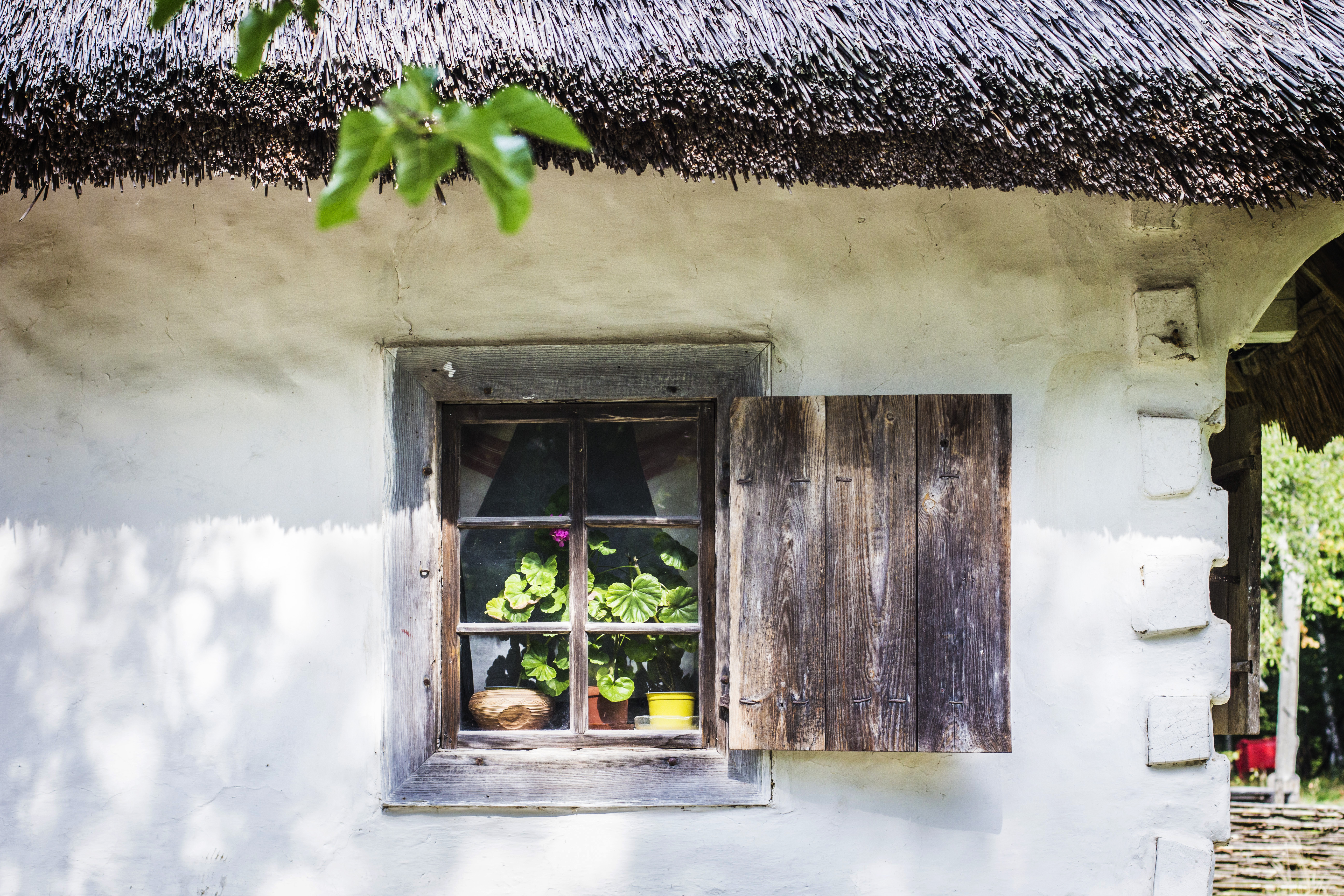
Limewash is made from slaked lime — calcium hydroxide — mixed with water and, in most modern formulations, natural mineral pigments. Unlike standard latex paint, which sits on top of a surface as a continuous plastic film, limewash penetrates porous substrates and carbonates as it dries: the lime reacts with carbon dioxide in the air and converts back to calcium carbonate, the same mineral that makes up limestone. That chemical reaction is what gives a limewashed wall its depth and its characteristic slight variation from area to area. It is less a coating than a mineral treatment.
The finish is matte, chalky, and slightly translucent. Depending on how many coats are applied and how wet the surface is when each coat goes on, you can get anything from a barely-there wash to a fully opaque surface that still reads differently from flat latex. It does not chip or peel the way a film-forming paint does. Over time it weathers into a patina — lighter in the most sun-exposed areas, slightly deeper in sheltered spots — that tends to look more appropriate on a stucco or masonry surface than the chalking, fading uniform color you get as latex ages.
The terms "lime wash paint" and "limewash paint" refer to the same product. "Whitewash" is often used interchangeably, though historically whitewash was a cruder, cheaper mixture. Modern products marketed as limewash are formulated to a higher standard — controlled pigment suspension, better coverage, and a longer open time for working the finish.
How much does limewash paint cost in San Diego?
Professional limewash application in San Diego runs $1.50–$6.00 per square foot for interior work. Exterior applications on complex stucco surfaces with significant preparation run higher. The range is wide because limewash is labor-intensive — it rewards a skilled applicator and punishes a rushed one.
For DIY, a gallon of quality limewash runs $25–$100 and covers approximately 350–400 square feet per coat. Most walls need two coats.
| Scope | Professional Cost | DIY Materials |
|---|---|---|
| Accent wall (100–200 sq ft) | $150–$1,200 | $50–$200 |
| Interior full room (400 sq ft) | $600–$2,400 | $100–$400 |
| Exterior stucco (1,000 sq ft) | $1,500–$6,000 | $350–$1,000 |
| Full home exterior (2,000 sq ft) | $3,000–$12,000 | $700–$2,000 |
| Gallon of limewash (materials only) | — | $25–$100 |
What drives you toward the top of that range: intricate surfaces with lots of trim, windows, or architectural detail; surfaces that need prep beyond cleaning; and complexity of color layering for a multi-tone effect. What drives you toward the low end: smooth, previously unpainted masonry in good condition with a single consistent color.
For comparison against a standard latex repaint, our San Diego painting cost guide puts a typical exterior latex repaint at $4,500–$9,000 on a San Diego home. When prep is equivalent, limewash on stucco is not dramatically more expensive.
Limewash vs regular paint: what actually changes
The most consequential difference is breathability. Modern latex paint forms a continuous film over the surface. Limewash does not — it mineralizes into the substrate and allows moisture vapor to pass through freely. On masonry and stucco, that matters considerably.
Latex on a stucco exterior in San Diego will eventually trap moisture behind the film — from driving rain on the west face, from condensation cycles, or from humidity moving outward from the interior. When that moisture cannot escape, pressure builds and the coating eventually fails from behind: bubbles, blisters, flaking. Limewash, being fully vapor-permeable, largely avoids this failure mode. The moisture moves through rather than around.
The second practical difference is repairability. Patching latex on an exterior wall almost always shows — the sheen, texture, and age of the new patch reads against the surrounding surface. Limewash touch-ups blend. The natural variation in the finish absorbs them visually.
Where regular latex wins: washability. A quality latex eggshell or semi-gloss on interior walls handles scrubbing, fingermarks, and regular cleaning in a way that limewash cannot. Limewash is also not appropriate for high-humidity interior spaces that lack good ventilation.
What surfaces work — and which do not
Limewash requires a porous, absorbent substrate to bond correctly. The list of what works well is also the list of what is most common in San Diego:
- Stucco — traditional three-coat stucco and one-coat synthetic stucco both accept limewash well, provided the surface is clean, sound, and not sealed with a prior elastomeric coating.
- Brick — fired brick and concrete block are both ideal substrates. The porosity of brick absorbs limewash evenly and ages well.
- Drywall — limewash on drywall requires a mineral-based primer first. Without primer, the paper absorbs unevenly and produces a blotchy result. Properly primed, it works well for interior accent walls.
- Plaster — traditional lime plaster and gypsum plaster are both compatible. Older homes with original plaster walls are good candidates.
- Concrete — unsealed concrete block and poured concrete accept limewash, though the result is less textured than on brick or stucco.
What does not work without extensive preparation:
- Previously sealed painted surfaces — if the existing paint is intact and non-porous, limewash has nowhere to penetrate and will eventually flake. The options are to remove the existing coating or accept a topical result that will not integrate with the substrate.
- Glossy surfaces — anything with a sheen needs to be sanded or stripped first.
- Surfaces with active moisture — limewash does not fix a moisture problem. Mineral deposits from water cycling through the finish cause efflorescence staining.
- Ferrous metal — limewash is not a rust-inhibiting primer and is not appropriate for steel or iron surfaces.
Why limewash fits San Diego homes specifically
San Diego has more Spanish Colonial Revival and Mediterranean-style homes than most cities in the country. Stucco exteriors account for the majority of residential construction across the county. Limewash is not a trend here — it is historically appropriate. The architectural tradition that produced these homes came from a region where lime-based finishes were standard for centuries.
The practical case is equally strong. San Diego's climate — coastal humidity on the west, hot dry inland air, and the marine layer that blankets coastal neighborhoods most mornings from May through September — creates consistent pressure on exterior coatings. A non-breathable film on a stucco surface can trap the moisture that accumulates during marine layer hours and then tries to escape during afternoon dry heat. That cycling is one of the primary drivers of early paint failure on San Diego exteriors.
Our view after 18 years of painting San Diego stucco: most of the exterior repaint failures we are called to fix — the blistering, the short-cycle repaints, the peeling on west-facing walls — are moisture-related, not product-quality-related. A breathable finish like limewash removes the primary failure mechanism. That is not a reason to limewash every house in La Mesa, but it is a real advantage on stucco homes in coastal microclimate zones where cycling moisture is consistent year to year.
For homes in HOA-governed communities, note that limewash needs HOA approval the same as any other exterior color or product change. The matte, varied finish looks different from standard latex, and some architectural committees will require a sample panel before approving. Build that timeline into your project planning.
Coastal timing is the same consideration as for any exterior coating in San Diego — the marine layer season shifts the optimal scheduling window. Limewash applied over a surface wet from morning fog will absorb unevenly. Late September through December and late February through May are the more reliable windows on the coast.
Interior limewash: rooms, colors, and finish options
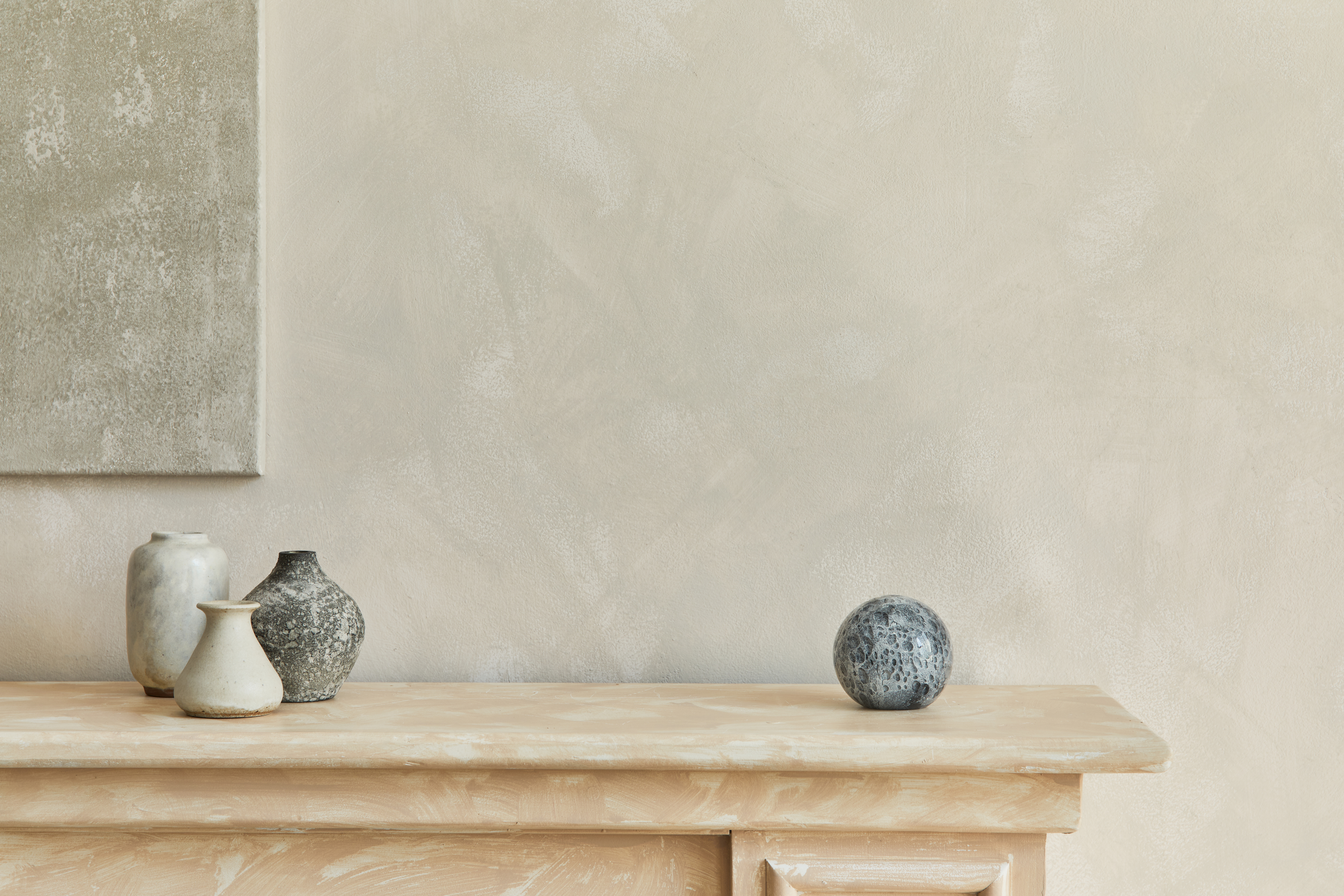
Interior limewash is most commonly used on accent walls, fireplace surrounds, and entryways — surfaces where the depth and texture read as a design element rather than just a background. It works in living rooms, dining rooms, bedrooms, and hallways with normal humidity. The look it creates is difficult to replicate with standard paint, which is the main reason clients choose it.
The natural color range skews toward earthy whites, warm grays, clay tones, ochres, and terracottas — all of which sit well against the warm wood tones and natural materials common in San Diego interiors. Many manufacturers now produce deeper colors: navy, forest green, rust, near-black. The depth of the finish makes these tones look different from their latex equivalents — richer, less flat.
The room to be careful with is the bathroom. A well-ventilated bathroom with an exhaust fan that actually runs during and after showers is fine. A bathroom where moisture consistently builds up — condensation on mirrors, ceiling drips — is not a limewash candidate. The finish absorbs moisture and will show water marks that do not fully disappear.
For kitchens: the area near the range is not appropriate. Limewash cannot be wiped down the way an eggshell or semi-gloss can. A limewashed accent wall on the far side of the room from cooking is fine. The wall behind the range is not.
Exterior limewash in San Diego: climate, HOA, and coverage
Exterior limewash on stucco is where the product makes its strongest practical case in San Diego. The finish handles thermal expansion and contraction in masonry better than latex film coatings, because it does not form a continuous flexible membrane that can delaminate. Hairline cracks in stucco that would telegraph through a latex coating are less visible in a limewash finish.
The California Air Resources Board's architectural coating regulations continue to restrict VOCs in exterior products. Traditional limewash is inherently zero-VOC — a practical benefit in California's regulatory environment and a genuine air quality advantage on occupied homes where painting happens within a few feet of windows and entry doors.
Coverage rates on exterior stucco vary more than a square footage calculation suggests. Heavily sand-finished stucco has considerably more actual surface area than its measured footprint — plan for 20–30% more material than a flat-surface estimate would indicate. Your contractor should account for this in the written proposal.
San Diego's UV exposure is significant on south- and west-facing walls. Limewash lightens in the most exposed areas over time. This is consistent with how the finish performs on Mediterranean buildings historically, and most clients who specifically choose limewash because they want that natural aging find the result appropriate. Clients who want a uniform, consistent exterior color every year should choose a quality latex with a reliable repaint cycle instead.
How limewash paint is applied
Limewash application is labor-intensive and technique-dependent. It is not brushed on like latex — the correct method uses a large masonry brush in irregular, overlapping strokes that build up layers of translucent color. The amount of water in each coat, the direction of strokes, and the dryness of the substrate all affect the final result. Two applicators on the same wall can produce noticeably different finishes with the same product.
The standard professional process:
- Surface preparation — cleaning, filling significant cracks, addressing adhesion issues. On previously painted surfaces, the existing coating must be assessed for compatibility and may need to be abraded or removed.
- Primer (drywall only) — bare drywall requires a mineral-based primer. Masonry and stucco typically do not, but heavily sealed or previously painted surfaces may need mechanical abrasion.
- First coat — applied in irregular cross-hatch strokes while keeping the mixture wet enough to blend. On large surfaces, this is often a two-person job to maintain a wet edge.
- Drying time — the first coat must be fully dry before the second is applied. Under typical San Diego conditions, that takes 4–8 hours; longer in coastal areas during marine layer season.
- Second (and sometimes third) coat — applied in the same manner, often with the mixture slightly diluted to add translucency to the final layer.
- Sealer (optional) — a vapor-permeable mineral-based sealer can be applied on exterior surfaces or in lightly trafficked interior areas to improve cleanability. This is not standard on all jobs and adds cost.
Do not use a roller for limewash. A roller produces a flat, uniform result that eliminates the main visual benefit of the finish. The variation requires a brush.
How long does limewash paint last?
On masonry exteriors with proper preparation, exterior limewash lasts 10–20 years before needing significant attention — comparable to or better than a quality latex exterior on the same substrate. The maintenance story is also different. Latex fails by flaking and peeling, which requires scraping and preparation before recoating. Limewash fades and lightens over time but does not generally fail in a way that requires stripping before maintenance. A fresh coat applied over weathered existing limewash bonds well.
The National Park Service's guidance on exterior paint problems in historic structures consistently identifies lime-based finishes as among the most durable and maintainable coatings for masonry — which is why most historic preservation projects specify limewash for original and restored masonry work.
Interior limewash on walls with normal humidity and no heavy scrubbing lasts indefinitely. The most common reason to redo an interior limewash is a color change, not coating failure.

DIY vs professional application
DIY limewash is achievable on small interior accent walls if you approach it with realistic expectations and practice on a small, inconspicuous area first. The material is inexpensive and forgiving — wet limewash can be wiped back or blended while it is still working. The product window is more generous than most people expect.
Where DIY runs into trouble: large surfaces, exterior application, and surfaces with preparation challenges. A professional who limewashes regularly works a 12-foot wall quickly enough to maintain consistent wet edges and blending across the whole surface. A first-time applicator working more slowly tends to get visible lap lines where a fresh stroke meets a section that has started to set. On a 400-square-foot living room wall, those lines are hard to undo.
Exterior DIY has a steeper learning curve still. Working on stucco from a ladder, maintaining consistent mixture viscosity as the day heats up, and managing material use across a large surface are skills that develop over multiple projects. This is not a first-time project we would recommend for an exterior application.
The honest calculus: if the wall matters — a focal point, a large open room, an exterior that the street and your neighbors see — hire a professional. If it is a small bedroom accent wall you are comfortable experimenting on, DIY is a reasonable choice. The material is not expensive. A professional result, though, is why people walk into a room and immediately notice the wall.
When you should not choose limewash
Limewash is not the right finish for every situation. We say this having redirected jobs where we did not think it would serve the client well.
- You have active moisture intrusion in the wall. Limewash's breathability is a feature, not a waterproofing system. If your stucco is wet from a flashing failure, a plumbing leak, or missing caulking at windows, limewash will not fix it — and mineral deposits from water cycling through the finish will cause efflorescence staining. Fix the source first. For a fuller list of what paint cannot solve, see our post on when not to hire a painter.
- You want a surface you can clean easily. Limewash is not practical for hallways with small children, kitchen walls near cooking, or bathrooms with heavy moisture. It is a design finish, not a utility finish.
- Your substrate is sealed and you do not want to strip it. If your stucco has a prior elastomeric coating or multiple layers of intact latex, proper limewash application requires removing or abrading those layers. That is not a small job. Skipping prep produces a topical application that will eventually delaminate.
- Your HOA requires a specific product or standard sheen. The matte, varied appearance of limewash is different enough from standard latex that it may not meet HOA specifications without prior approval. Confirm before you start.
- You want a uniform color that stays consistent year to year. The natural variation and aging of limewash is its appeal to most people who choose it. If you want a surface that looks identical from coat to coat and season to season, a quality exterior latex is the better choice.
If you are in San Diego County and want an honest look at whether your home is a good limewash candidate — the surface, the substrate, the prep involved, and what it will actually cost — call us at (619) 861-9377. No forms, no hold music. Joe or Alex on the line. We have been painting San Diego homes and commercial properties since 2007 and will tell you the same thing we just wrote: limewash is a strong choice for the right project, and the wrong choice for several others.
FAQ
How much does limewash paint cost in San Diego?
Professional limewash application runs $1.50–$6.00 per square foot for interior work in San Diego. A single accent wall runs $150–$600 professionally. A full exterior on a 1,500-square-foot stucco home runs $2,250–$9,000 depending on prep requirements, complexity, and access. DIY materials cost $25–$100 per gallon with coverage of approximately 350–400 square feet per coat.
Does limewash paint work on drywall?
Yes, with a mineral-based primer applied first. Without primer, the drywall paper absorbs limewash unevenly and produces a blotchy result. Properly primed drywall accepts limewash well for interior accent walls. Masonry and stucco produce a more integrated result, but primed drywall is a workable interior substrate.
How long does limewash paint last?
On properly prepared masonry exteriors, 10–20 years before needing significant maintenance — comparable to or better than quality latex on the same surface. Interior limewash on walls with normal humidity and no heavy scrubbing lasts indefinitely. Unlike latex, limewash does not fail by peeling. It fades over time, and new coats applied over aged limewash bond without stripping.
Can you limewash exterior stucco in San Diego?
Yes. Exterior stucco is one of the best substrates for limewash, and San Diego's stucco homes suit the finish both practically and historically. The main preparation requirement is that the stucco is clean, structurally sound, and not sealed with a prior elastomeric or thick-film coating. Apply only when surfaces are dry — morning marine layer moisture on coastal homes is a real factor, particularly May through September.
Is limewash paint safe for indoors?
Yes. Traditional limewash is zero-VOC and made from natural mineral ingredients. There are no solvent off-gases during or after application. The fresh product is alkaline — standard skin protection is recommended during application — but once dried and carbonated, the surface is inert. It is among the better choices from an indoor air quality standpoint compared to solvent-based or high-VOC products.
Can you paint over limewash with regular latex paint?
Yes. Latex over cured limewash is possible — the limewash acts as a porous mineral substrate and accepts a latex topcoat. Some applicators use a diluted latex bonding primer before the topcoat to ensure adhesion. Note that the breathability benefit of limewash is eliminated once a continuous latex film is applied over it, which is worth considering if breathability was the reason for choosing it in the first place.
Does limewash paint need a sealer?
Not always. Interior accent walls in dry rooms do not need a sealer. For exterior applications on surfaces exposed to direct rain, a vapor-permeable mineral sealer extends the finish life and reduces water absorption. For interior surfaces that may occasionally be wiped — hallways, entry areas — a matte limewash-compatible sealer adds cleanability without significantly changing the appearance. Avoid non-breathable sealers, which eliminate the main benefit of the finish.
What is the difference between limewash and whitewash?
Historically, whitewash was a crude mixture of hydrated lime and water — inexpensive but inconsistent. Modern products marketed as limewash are formulated to a higher standard: controlled pigment suspension, consistent coverage, and a longer working window. The terms are used interchangeably today, but a product labeled "limewash" from a reputable manufacturer is generally more refined than what the old whitewash term implies.
Penney's Professional Painting — limewash, interior, and exterior painting across San Diego County since 2007.
We will tell you whether your surface is a good candidate for limewash before we quote anything. If it is not, we will say so.
Walk the job with Joe or Alex.
Tell us what you're thinking. We'll come look, point out what we'd do differently, and only quote what we'd paint in our own house.