
Elastomeric Paint for Stucco in San Diego: When It's Worth It (and When It's Not)
Joe Penney has been painting in San Diego County since 2007 and in the trade for over 35 years. Every job — residential, commercial, and specialty coatings — is run by Joe or his son Alex personally. No subcontractors, no franchise crews. CA License #794402-C33.

Quick answer
Elastomeric paint for stucco is a thick, flexible coating — roughly 10 times the thickness of standard paint — that bridges hairline cracks and seals a wall against wind-driven rain. Professionally applied in San Diego it runs about $1.50–$5.00 per square foot, and it lasts 10–15 years versus 5–8 for standard acrylic. It is the right call for cracked, weather-beaten stucco — and the wrong call for a wall holding trapped moisture, which is more common near the coast than people expect.
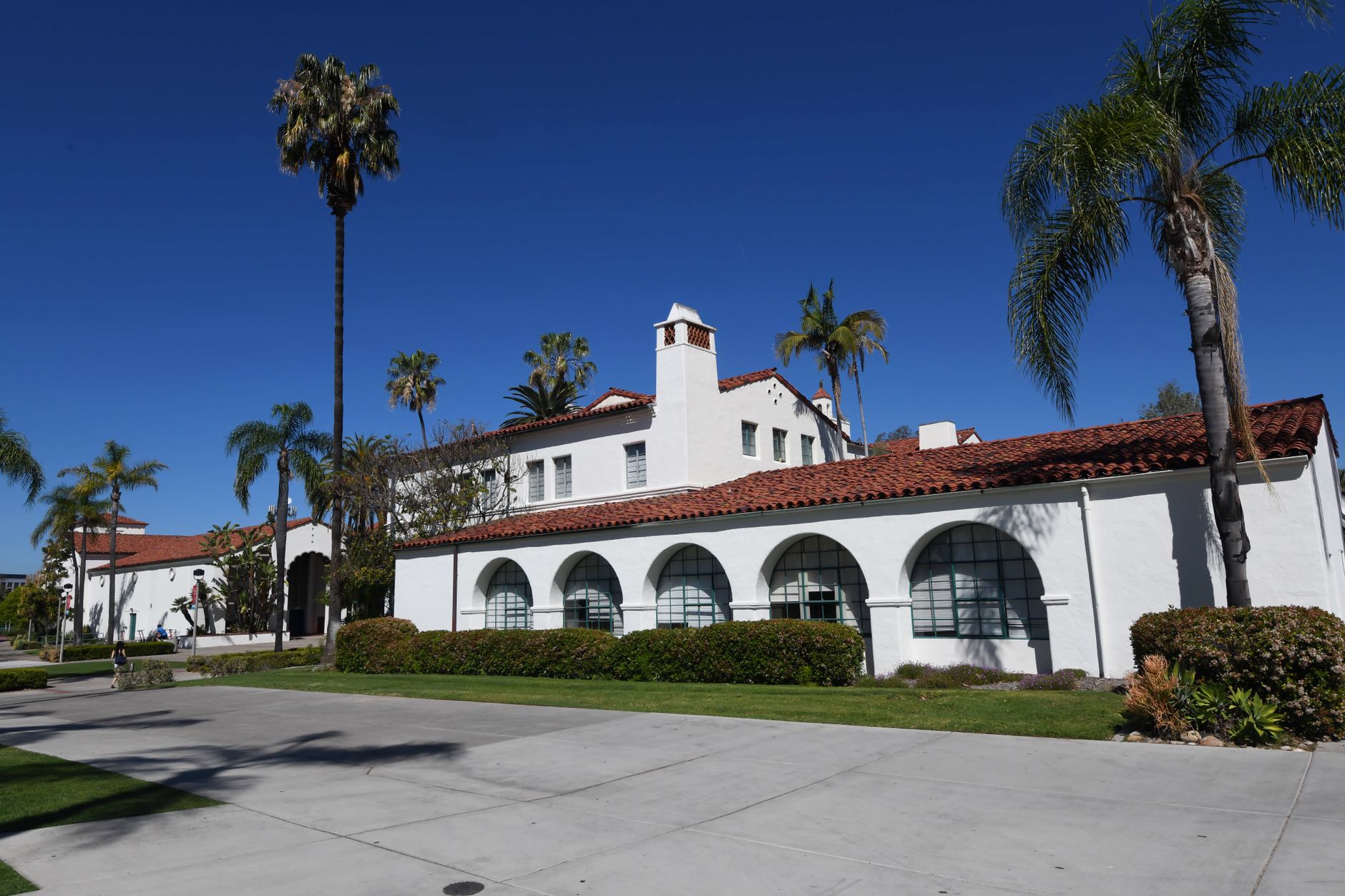
Stucco is the cottage cheese of exterior finishes — nearly every home in San Diego County is wearing it, and almost nobody remembers choosing it. It also happens to be one of the most forgiving surfaces we work on, right up until the day a hairline crack lets water in and it stops forgiving anything. That is the moment most people first hear the word “elastomeric,” usually from a contractor who is about to quote it whether the wall needs it or not.
This guide covers what elastomeric paint for stucco actually is, what it costs in San Diego, how it goes on, where it genuinely earns its price, and the three or four situations where it is the wrong product and we say so. We have been painting and coating exterior surfaces in this county for over 35 years — no subcontractors, no call center, C33 license #794402-C33 — and a good chunk of what follows comes from repairing elastomeric jobs that should never have been elastomeric jobs. By the end you will know whether your stucco is a candidate or whether you are about to spend double for a coating your wall does not want.
What is elastomeric paint?
Elastomeric paint is a high-build acrylic coating that dries into a flexible, rubber-like membrane instead of a thin film. The name comes from “elastomer” — a material that stretches and returns to shape. Applied correctly, it goes on at roughly 10 times the thickness of standard house paint and can stretch over a moving hairline crack without splitting. That elasticity is the entire point. Everything else — color, sheen, brand — is secondary.
A normal gallon of exterior acrylic covers 250–400 square feet. A gallon of elastomeric covers 75–125 square feet, because you are laying down far more material. That thickness is what lets it span cracks and shrug off wind-driven rain, and it is also why the product costs more and takes longer to apply. It is a coating, not a color coat — the difference matters when you are reading a quote.
Can you paint stucco in San Diego?
Yes. Stucco takes paint well and holds it for years when the prep is done right and the wall is dry. The two things that decide the outcome are moisture and timing — not the brand on the bucket. A dry, sound stucco wall painted in the right conditions will hold a quality exterior coating for 8–15 years depending on the product. A damp wall, or one painted over active moisture, will fail no matter what you spend.
New stucco is the one case where you have to wait. Fresh stucco is highly alkaline as it cures, and painting too soon causes a failure called saponification — the alkalinity breaks down the paint binder and the coating peels or turns to a soapy film. Give new stucco at least 30 to 60 days to cure and neutralize before coating it, longer in cool, damp marine-layer weather. If you are timing an exterior repaint at all, our guide to the best time of year to paint an exterior in San Diego walks through how marine layer and humidity change the schedule.
Why elastomeric and stucco go together

Stucco cracks. It is a cement-based surface applied over a wall that expands, contracts, and settles, so hairline cracking is not a defect — it is the material behaving normally. Standard paint sits as a thin film on top of those cracks and splits right along with them the first time the wall moves. Elastomeric masonry paint is thick and flexible enough to bridge a hairline crack and stay intact when the wall shifts underneath it.
The second job it does is waterproofing. A continuous elastomeric membrane sheds wind-driven rain that would otherwise wick into open cracks and sit behind the finish. That is why the product was designed for climates with heavy rain, storm exposure, and freeze-thaw cycles. Hold that thought — San Diego has almost none of those conditions, and it changes the math more than any brochure will admit. We get to that in the acrylic comparison below.
It is worth saying clearly: elastomeric bridges hairline cracks. It does not repair structural cracks, and it is not a patch. If your stucco has cracks wider than a credit card, staircase cracks near corners, or gaps that keep reopening, those are a stucco repair problem first and a paint problem second. Coating over a moving structural crack just gives you a rubber-coated structural crack.
How much does elastomeric paint for stucco cost in San Diego?
Professionally applied, exterior stucco paint using an elastomeric system runs roughly $1.50–$5.00 per square foot of wall in the San Diego market. Where a job lands in that range depends on the condition of the stucco, how much crack repair and prep it needs, the number of stories, and access. These are general market ranges, not a quote — the only honest price is one written after someone walks your specific walls.
| Line item | Typical range | Notes |
|---|---|---|
| Elastomeric coating, installed | $1.50–$5.00 / sq ft | Full wall area, labor + material |
| Elastomeric paint, material only | ~$100 / gallon | Vs. $30–$40 for standard acrylic |
| Coverage per gallon | 75–125 sq ft | Vs. 250–400 for standard acrylic |
| Crack and stucco repair | Priced separately | Structural cracks are not a paint line item |
| Expected lifespan | 10–15 years | Vs. 5–8 years for standard acrylic |
The material sticker shock is real: elastomeric runs about $100 a gallon against $30–$40 for a good standard exterior acrylic, and it covers a third to half as much wall per gallon. So on material alone you are often paying three to four times as much to cover the same house. The counter-argument is lifespan — 10–15 years versus 5–8 — which spreads that cost over more years. Whether that trade favors you depends heavily on your wall and your climate, which is the whole reason the acrylic comparison section exists. For a broader picture of exterior pricing across systems, our San Diego exterior painting cost guide breaks down every line item on a typical repaint.
Types of elastomeric and masonry stucco paint
“Elastomeric” is a category, not a single product. Here is what you will run into when you shop stucco paint or read a quote.
Standard elastomeric wall coating
The most common type for residential stucco — a high-build acrylic elastomeric applied at manufacturer-specified thickness, usually as two coats over a compatible primer. This is what most people mean by “elastomeric paint for stucco.” Good crack bridging, good water resistance, low breathability.
Elastomeric masonry paint
Formulated specifically for masonry, block, and stucco. Functionally similar to a standard elastomeric wall coating, often marketed for CMU block and commercial masonry where crack bridging and water resistance matter more than a decorative finish.
Breathable (high-perm) masonry coatings
Not technically elastomeric, but they belong in the conversation. A mineral or high-perm acrylic masonry coating lets vapor move out of the wall — the opposite of what elastomeric does. On older homes and coastal walls that need to dry outward, this is frequently the better choice. If you like the matte, mineral look, limewash on San Diego stucco is the breathable end of that spectrum.
Standard exterior acrylic
The default for most repaints. Thinner, cheaper, more breathable, easier to apply, and for a lot of San Diego stucco it is the right answer. It does not bridge cracks the way elastomeric does, so it pairs with proper crack filling during prep.
Painting stucco with elastomeric paint: the process
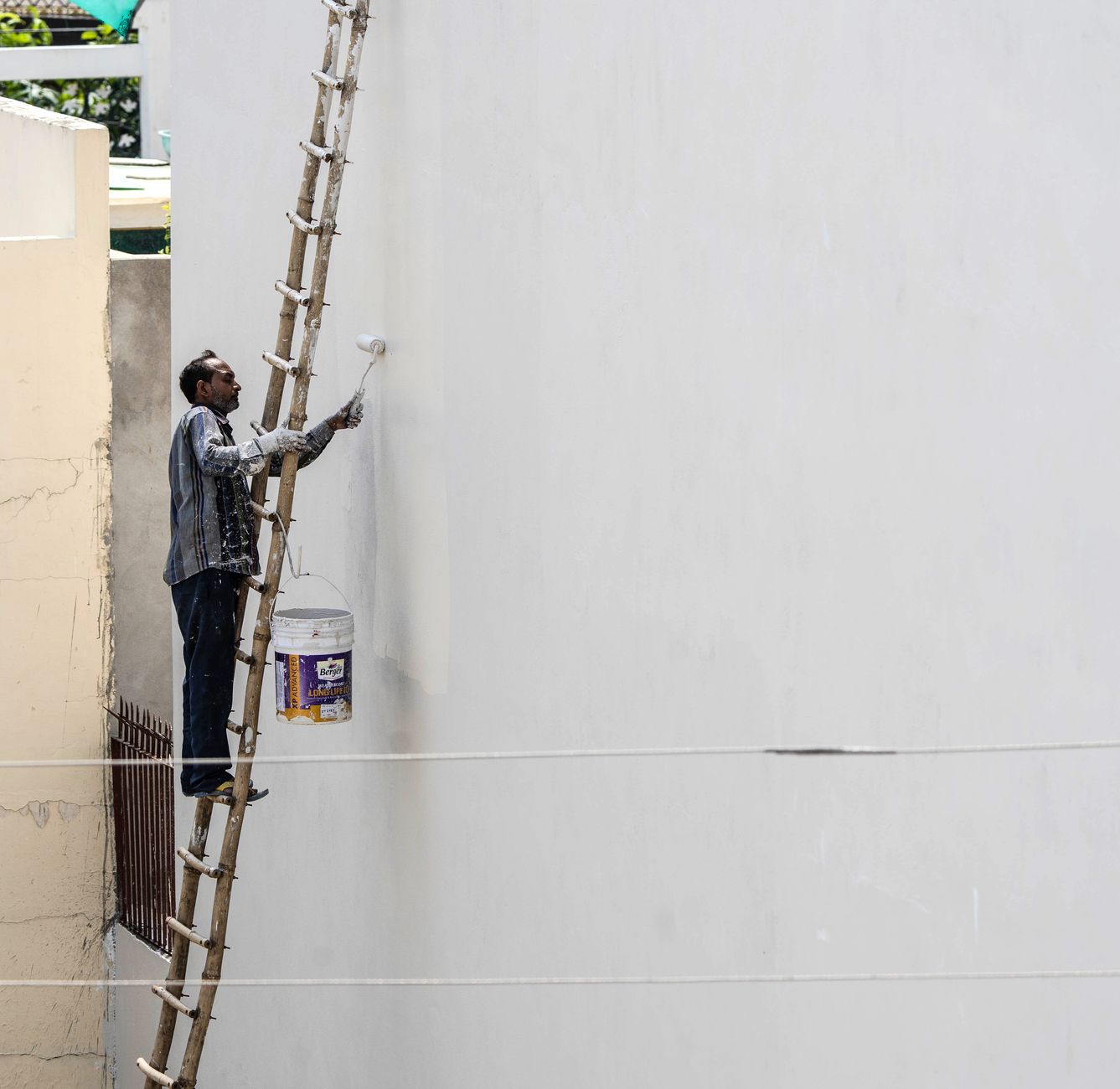
Elastomeric is unforgiving of shortcuts, and almost every failure we are called to fix traces back to prep or moisture, not the coating itself. Here is the process that actually holds up.
- Confirm the wall is dry. This is step zero and it is the one people skip. Elastomeric seals moisture in as effectively as it keeps rain out, so a damp wall has to dry fully before any coating goes on. After rain or heavy marine layer, that can mean days.
- Clean it. Pressure wash off dirt, chalk, mildew, and any loose or failing coating. Elastomeric bonds to a clean, sound surface — not to chalk or a previous coating that is already letting go.
- Repair cracks and defects. Fill hairline cracks; route out and patch larger ones properly. Structural cracks get addressed as stucco repair, not buried under coating.
- Prime. A masonry or elastomeric-compatible primer improves adhesion and blocks alkalinity on newer or bare stucco. Skipping primer on a chalky or fresh wall is a common reason coatings peel early.
- Apply two coats, thick and even. Elastomeric earns its performance from film thickness. It is applied in at least two coats — usually back-rolled to work it into the stucco texture — each fully dry before the next. One thin coat is not an elastomeric job; it is expensive paint applied wrong.
- Respect the weather window. Apply in mild, dry conditions. Coating in the morning marine layer or with rain in the forecast traps moisture under the membrane and causes the exact bubbling it is supposed to prevent.
For a technical walk-through of prepping and coating stucco, This Old House keeps a solid guide to preparing, priming, and painting stucco that lines up with how the pros approach it.
The disadvantages of elastomeric paint no one mentions
The single biggest disadvantage of elastomeric paint is the flip side of its biggest strength: it does not breathe. Most elastomeric coatings have a very low perm rating, often under 2.0, which means water vapor cannot pass through the membrane. When the coating is keeping rain out, that is a feature. When moisture gets behind it from any other direction, it becomes the problem.
Stucco is a reservoir surface — it is designed to absorb some moisture and release it outward as the wall dries. The Portland Cement Association explains how cement-based stucco manages moisture and vapor as a system. Wrap that wall in a low-perm elastomeric membrane and you have taken away its ability to dry outward. If water then enters from a leaky window, bad flashing, a roof issue, or wicking up from the foundation, it has nowhere to go. It collects behind the coating and lifts it off the wall in bubbles — the failures painters call “water balloons.”
The other honest drawbacks: it costs three to four times as much per gallon as standard acrylic, covers far less wall, is harder and slower to apply well, and it hides the stucco texture that many San Diego homeowners actually like. None of these are deal-breakers on the right wall. On the wrong wall, they add up to paying a premium for a coating that shortens the life of your stucco instead of extending it.
Elastomeric vs. acrylic for San Diego stucco
Here is the opinion we will put our name on: in most of San Diego, elastomeric paint is oversold. It was engineered for wind-driven rain, storms, and freeze-thaw cycles, and San Diego averages around 10 inches of rain a year with a climate that almost never freezes. The condition elastomeric is built to fight barely exists here. For a sound, moderately cracked stucco wall inland, a quality standard acrylic at roughly a third of the material cost — $30–$40 a gallon against about $100 — is usually the better value and the better call for the wall, because it lets the stucco keep breathing.
That is not a blanket “never use elastomeric” take. It earns its price on walls with persistent hairline cracking, on exposed elevations that take real wind-driven rain, and on some commercial and masonry surfaces where a monolithic waterproof membrane is genuinely the goal. We apply elastomeric and specialty coatings regularly — it is part of what we do, including demanding commercial work. The point is narrower and more useful: match the coating to the wall and the climate, not to the biggest number on the estimate. When someone quotes elastomeric for a dry, sound inland stucco wall with no crack history, ask them why standard acrylic will not do the same job for less.
San Diego-specific factors no one talks about

National guides on elastomeric paint are written for everywhere, which means they are written for nowhere in particular. San Diego has a specific set of conditions that change whether this coating is a good idea on your wall.
The marine layer changes the drying math
Within a few miles of the coast — La Jolla, Pacific Beach, Ocean Beach, Point Loma — the morning marine layer keeps walls damp well into the day for much of the year. That matters twice. First, a wall has to be genuinely dry before elastomeric goes on, and “dry to the touch by noon” is not the same as dry through. Second, a coastal wall that needs to dry outward is the last wall you want to seal in a low-perm membrane. Breathability is worth more near the water than waterproofing is.
Low rainfall undercuts the main selling point
Elastomeric's headline benefit is shrugging off heavy, wind-driven rain. San Diego gets roughly 10 inches a year, most of it gentle. The scenario the product is built for shows up a handful of days annually here, which is exactly why so many inland homes do fine on standard acrylic with good crack prep.
Older stucco stock and multiple paint layers
A lot of homes in La Mesa, El Cajon, and the older parts of the county have stucco that has been repainted several times. Piling a heavy, high-build elastomeric coating on top of multiple existing layers adds weight and stress the old layers may not hold, which can pull the whole stack off the wall. On a much-repainted wall, a lighter breathable coating is often safer than a thick one.
Spanish Revival and Mediterranean texture
San Diego is full of Spanish Revival and Mediterranean homes where the stucco texture is part of the architecture. Elastomeric's thickness can soften or partially fill fine texture over successive coats. If the texture is a feature you care about, that is a real trade-off to weigh before committing to a high-build coating.
How to vet a stucco painter in San Diego
The aftermath of a bad elastomeric job is expensive to undo, so the questions you ask before signing matter more here than on a standard repaint. After 35 years in this county with zero subcontractors — which means we own every result and every callback — these are the ones worth asking.
Are you licensed and insured in California?
Ask for the CA contractor license number and verify it yourself on the CSLB license check portal. A C33 classification is Painting and Decorating and covers this work. It takes 30 seconds and tells you whether the license is active, bonded, and classified correctly.
Will you moisture test before coating?
Because elastomeric seals moisture in, a painter who does not care whether the wall is dry is the painter who will cause a bubbling failure. “We have never had a problem” is not a moisture test. Especially near the coast, this is the question that separates a lasting job from a callback.
Why elastomeric and not standard acrylic?
A good answer names something specific about your wall — active hairline cracking, a heavily exposed elevation, a documented water intrusion history. “It is the best paint we carry” is not a reason; it is a markup. If they cannot say why your particular wall needs it, you are being upsold.
Who actually does the work?
Some outfits quote with an estimator and send a rotating crew to apply the coating. Elastomeric done thin or unevenly fails, so ask whether the people applying it do this regularly. We have coated everything from tract stucco to demanding commercial surfaces, including specialty coating work at the San Diego Zoo, and the through-line is that the crew applying it knows the material — not just the estimate.
When you should not use elastomeric paint (or hire us for it)
This is the section that costs us jobs, and we write it anyway because sealing the wrong wall in elastomeric does more harm than a normal repaint ever could.
The wall holds trapped moisture
If there is active water intrusion — a leaky window, bad flashing, a roof issue, or wicking from the foundation — do not coat it in elastomeric. A low-perm membrane over a wet wall traps the moisture, and you get bubbling and peeling instead of protection. Find and fix the water source first. The coating is the last step, not the fix.
The stucco is failing or delaminating
Elastomeric bonds to a sound surface. If the stucco is crumbling, hollow-sounding, or pulling away from the wall, coating over it just glues a rubber skin to a failing substrate. That is a repair job first. We would rather send you to fix the stucco than take the paint money and watch it fail.
The home needs to breathe
Older homes and coastal walls that are designed to dry outward are poor candidates for a low-perm coating. On these, a breathable masonry coating or a quality acrylic protects the wall without turning it into a sealed bag. Match the coating to how the wall handles moisture, not to the price tag.
Your inland stucco is sound with no crack history
If your wall is dry, structurally fine, and not cracking, you are a great candidate for a standard exterior repaint and a poor candidate for paying elastomeric prices. We will tell you that on the walk-through and quote you the coating your wall actually needs.
For questions about elastomeric coatings, stucco, or any exterior painting in San Diego County, call us directly. No forms, no hold music — just Joe or Alex on the line at (619) 861-9377. We have been doing this in San Diego since 2007, and we will tell you the same thing we just wrote: whether your wall is a candidate for elastomeric, or whether a standard coating does the job for less.
FAQ
What is elastomeric paint?
Elastomeric paint is a thick, flexible acrylic coating that dries into a rubber-like membrane — roughly 10 times the thickness of standard house paint. It stretches to bridge hairline cracks and seals a wall against wind-driven rain. It covers only 75–125 square feet per gallon versus 250–400 for standard acrylic, because you are applying far more material.
Is elastomeric paint good for stucco?
It can be, on the right wall. Elastomeric is excellent for stucco that cracks or takes heavy wind-driven rain, because it bridges hairline cracks and waterproofs the surface. It is a poor choice for a wall with trapped moisture or one that needs to breathe, since its low permeability seals moisture in. Match it to the wall, not to the biggest number on the quote.
How much does elastomeric paint for stucco cost in San Diego?
Professionally applied, an elastomeric stucco coating runs about $1.50–$5.00 per square foot in San Diego, depending on stucco condition, prep, stories, and access. The material alone is around $100 a gallon versus $30–$40 for standard acrylic, and it covers less wall per gallon. The only accurate price comes from a walk-through of your specific walls.
Can you paint stucco in San Diego?
Yes. Stucco holds paint well when the wall is dry and the prep is done right. New stucco needs 30–60 days to cure before coating, or the alkalinity breaks down the paint. The deciding factors are moisture and timing, not the brand of paint.
What are the disadvantages of elastomeric paint?
The main disadvantage is low breathability — most elastomeric coatings have a perm rating under 2.0, so moisture that gets behind the film cannot escape and lifts the coating in bubbles. It also costs three to four times as much per gallon as standard acrylic, covers less wall, is harder to apply well, and can soften fine stucco texture.
How do you paint stucco with elastomeric paint?
Confirm the wall is fully dry, pressure wash it clean, repair cracks, prime with a masonry or elastomeric-compatible primer, then apply at least two thick, even coats — usually back-rolled into the texture — each fully dry before the next. Apply only in mild, dry weather. Elastomeric earns its performance from film thickness, so one thin coat is a failed job.
Does elastomeric paint trap moisture?
It can. Because elastomeric has a very low perm rating, it blocks water vapor from passing through. That is protective against rain, but if moisture enters the wall from a leak, bad flashing, or the foundation, the coating traps it and causes bubbling and peeling. Fix any water source before coating, and avoid elastomeric on walls that need to dry outward.
Is elastomeric or acrylic better for San Diego stucco?
For most sound, inland San Diego stucco, a quality standard acrylic is the better value. San Diego gets about 10 inches of rain a year and almost never freezes, so the wind-driven-rain conditions elastomeric is built for rarely occur, and acrylic lets the stucco breathe. Elastomeric earns its price on persistently cracking walls, heavily exposed elevations, and some commercial masonry.
Penney's Professional Painting — elastomeric and specialty coatings, interior, and exterior painting across San Diego County since 2007.
We will tell you whether your stucco is a good candidate for elastomeric — or whether a standard coating does the job for less — before we quote anything.
Walk the job with Joe or Alex.
Tell us what you're thinking. We'll come look, point out what we'd do differently, and only quote what we'd paint in our own house.