
Can You Use Exterior Paint Inside? What Actually Changes When You Do
Joe Penney has been painting in San Diego County since 2007 and in the trade for over 35 years. Every job — residential, commercial, and specialty coatings — is run by Joe or his son Alex personally. No subcontractors, no franchise crews. CA License #794402-C33.

Quick answer
No. You can physically put exterior paint on an interior wall, but you should not use exterior paint inside, and it is not a small shortcut — it is the wrong product for an enclosed space. The two categories are built differently on purpose. Exterior resins are formulated soft so the film can move with heat and cold, exterior paints carry mildewcides and UV stabilizers meant for weather, and exterior formulations sit in a different VOC category with generally higher allowances than interior paints under California's rules. Indoors that adds up to a wall that marks, sticks and gives off odor far longer than it should.
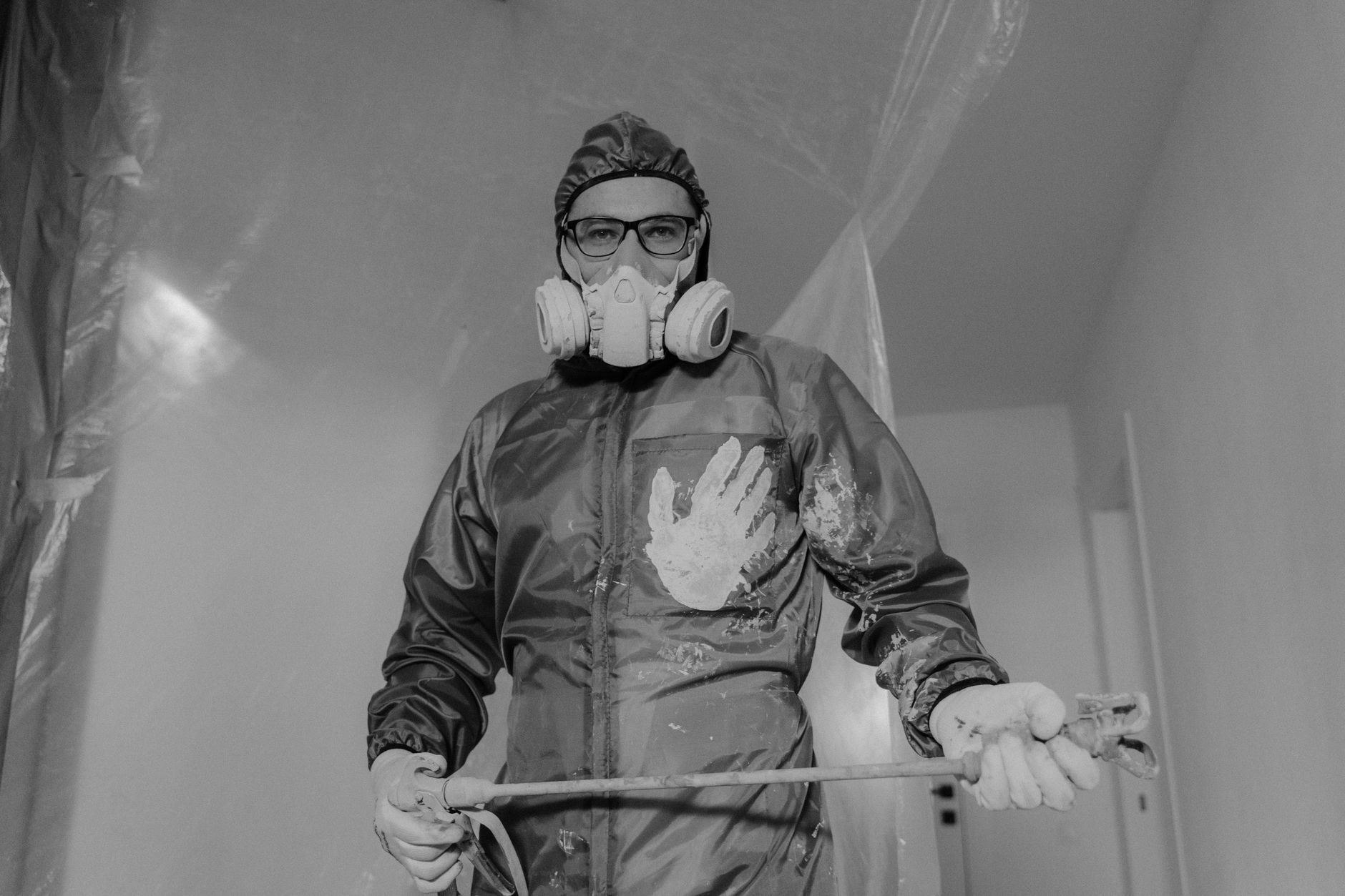
Somebody reading this has a five-gallon bucket in the garage with a third of it left, and a hallway that could use a coat. The math looks obvious. Exterior paint is the tougher product, it is already paid for, and the hallway is only going to get looked at. The trouble with that plan is that exterior paint indoors is a rain jacket worn to bed. It is unquestionably clothing, it will certainly keep the rain off, and nobody in that bed is getting a good night of sleep.
So this guide covers what actually separates the two products — resin flexibility, additives, VOC category and scrubbability — then the semi-conditioned spaces where the answer gets genuinely complicated, the reverse question, and what to do with the leftover paint instead of putting it on a bedroom wall. None of it is about one paint being weaker than the other. We have painted interiors and exteriors across San Diego County since 2007 out of La Mesa, with 35+ years in the trade behind the crew and zero subcontractors, so the person who specifies the product on your job is the person who rolls it.
The short answer, and why the question comes up anyway
No. Exterior paint should not be used inside a conditioned, enclosed, occupied room. It will stick to the drywall, it will look fine the week it goes on, and it will spend the next several years doing three things an interior paint would not do: holding onto odor, picking up a permanent shine wherever something touches it, and wearing additives that have no job to do in a bedroom.
The question is not a silly one, and we get asked it by sensible people every season. Usually it is leftover paint — a half-used five-gallon from last year's exterior, sitting in the garage, still good. Sometimes it is somebody trying to buy one product for a sunroom or a garage interior rather than two. Occasionally it is the belief that exterior paint is simply the heavy-duty version of the same thing, which is the most understandable mistake of the three, because the cans sit next to each other on the same shelf and only the label tells you they are different animals.
They are different animals. Both are pigment, resin, liquid and additives, and the manufacturer tunes all four for an environment. Exterior paint is tuned for weather. Interior paint is tuned for contact, cleaning and the fact that you breathe the air in the room. Swapping them does not fail loudly on day one. It fails quietly, over the first year, in ways that are annoying to live with and expensive to undo.
The difference between interior and exterior paint
Four differences matter, and all four work against you indoors: the flexibility of the resin, the additive package, the VOC category the product falls into, and how the film handles being touched and washed. Everything else — the pigment, the way it is applied, the brands on the shelf — is broadly the same conversation.
| What differs | Interior paint | Exterior paint |
|---|---|---|
| Resin and binder | Harder film, built to resist contact and cleaning | Softer, flexible film built to move with heat and cold |
| Mildewcides and biocides | Minimal — indoor air is the priority | Present by design, for shaded and damp exposure |
| UV stabilizers | Not needed behind glass and drywall | Core to the formulation, and the reason it holds color |
| VOC category | The tighter category under California coatings rules | A separate category with generally higher allowances |
| Scrub and burnish resistance | An engineering target | Not a design goal — weathering is |
| Where it belongs | Conditioned, enclosed, occupied space | Open air, sun, wind and rain |
Sheen is the one variable that crosses the line cleanly — a satin is a satin whichever aisle it came from, and choosing it is a separate decision covered in our guide to paint finishes and sheens. Brand is a separate decision too, and we have already written down which lines we specify and where. The next four sections take the four real differences one at a time.
Resin flexibility: why exterior paint stays soft indoors
This is the difference that costs people money, and it is the one nobody expects. Exterior resins are deliberately formulated to be flexible, because an exterior wall is a moving target. Stucco and siding expand in the afternoon sun and contract overnight, and a brittle film on a surface that moves cracks at every joint and then peels. So the chemists soften the binder on purpose. That flexibility is the whole reason exterior paint survives twenty years of thermal cycling.
A softer film behaves badly in a house. It stays faintly tacky under pressure long after it stops feeling wet, which the trade calls blocking — press two painted surfaces together and they bond rather than touch, so a door sticks to its jamb and a window sash sticks to its stop. It also burnishes: steady contact from a sofa back, a chair rail, a shoulder in a hallway or a vacuum head polishes the soft film into a shiny patch. And it holds dirt, because the surface never reaches the hardness that lets a wall shed a handprint.
Here is our strong opinion, and the one we repeat at estimates: using up leftover exterior paint on an interior wall is the most expensive way to save money in painting. The mechanism is specific. A film engineered to stay soft never reaches the block and burnish resistance an interior wall needs, so every contact point in the room marks — and burnish is a physical change in the film rather than dirt sitting on it, which means it does not wipe off. The repair is not a touch-up. It is priming and repainting the wall, and often the whole room, because a spot repaint over a burnished patch shows. A free bucket of paint buys a paid repaint.
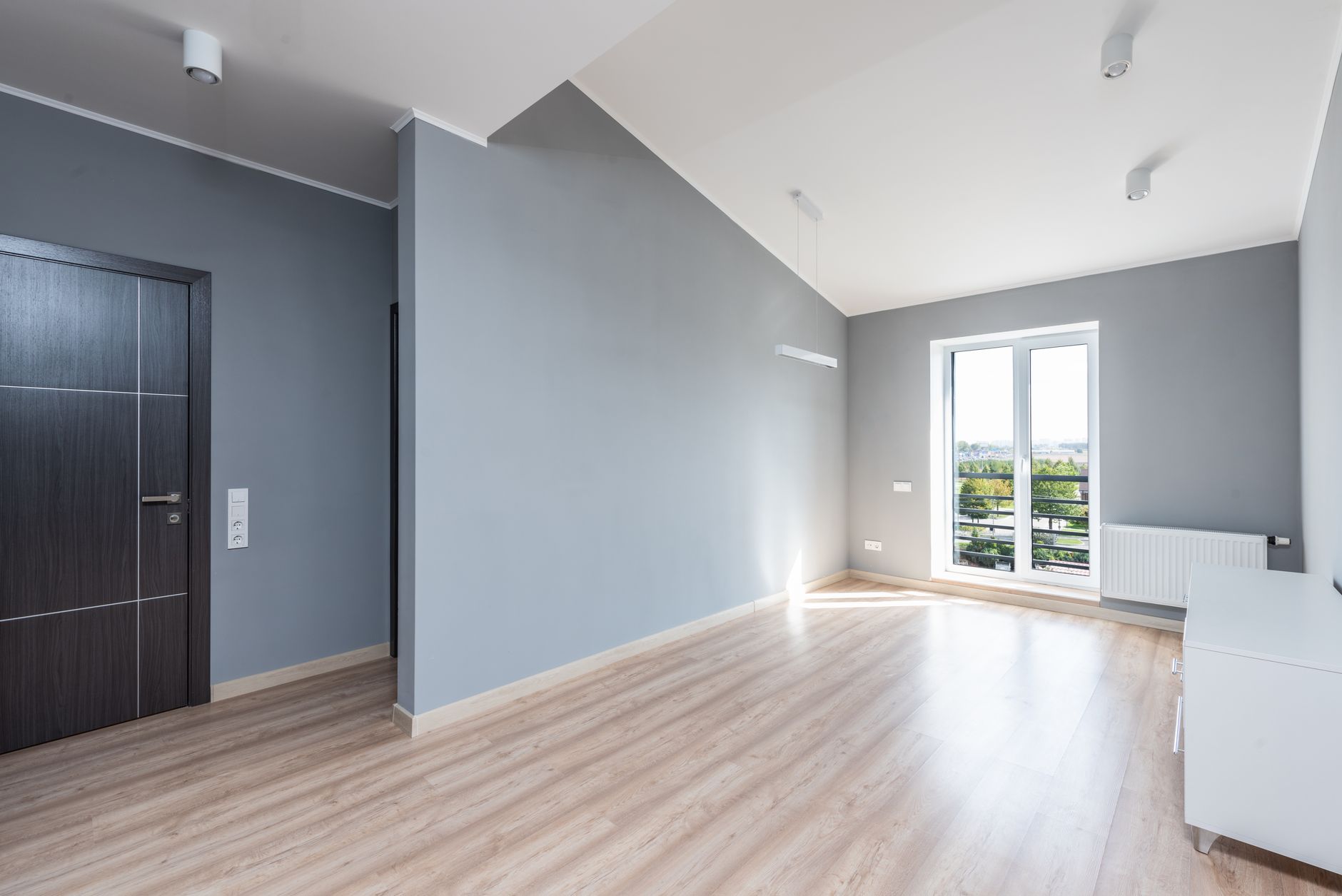
Mildewcides and UV stabilizers are meant to be outdoors
Exterior paint carries an additive package built for weather, and two parts of it are worth understanding before you bring a can indoors. The first is the biocide or mildewcide. A north-facing coastal wall in Del Mar or La Jolla sits shaded and damp for most of a June morning, and without a mildewcide in the film it grows a gray-green bloom within a couple of seasons. That additive earns its place on the outside of a coastal San Diego house. Sealing it into a closed bedroom is a different proposition, and it is a genuine reason to leave the can in the garage.
It is also unnecessary indoors, which is the part people miss. Interior mildew is a moisture problem, not a paint problem. A bathroom that grows mildew in the corners needs the fan run longer, the window cracked, and the source of the water found. A biocide-loaded coating does not fix a ventilation failure; it decorates it for a while. Interior products do carry mild mildew-resistance where it is appropriate, in bath and kitchen lines, formulated for an occupied room rather than for a wall in the weather.
The second part is the UV stabilizer, and it is simply wasted inside. Exterior paints are loaded with the chemistry that keeps resin and pigment from being broken apart by ultraviolet light — the reason a good exterior holds its color through San Diego sun instead of chalking in year three. Behind drywall and window glass there is almost no ultraviolet light to stabilize. You are paying for armor against a threat that is not in the room, and accepting a softer film in exchange.
VOC category and off-gassing in an enclosed room
Can you use exterior paint indoors from an air-quality standpoint? This is where the answer stops being about durability. Architectural coatings in California are regulated by category, and the categories are not the same: interior products fall under tighter volatile organic compound limits than the exterior categories, which are generally permitted higher allowances. That split is written into the rules on purpose, and the authority on it is the California Air Resources Board's Architectural Coatings Program. We are not going to quote you a number off a data sheet we have not read for your specific product — the can and the manufacturer's sheet carry the real figures. The direction is what matters here.
The reason the direction matters is geometry rather than chemistry. An exterior wall off-gasses into open air that is never the same air twice. A sealed bedroom with the windows shut concentrates whatever the coating gives off into a small volume with nowhere to go, which is exactly why the two product categories are treated differently in the first place. The EPA's guidance on volatile organic compounds and indoor air quality is the plain-English version of the same point.
Timing compounds it. Exterior coatings are formulated to cure slowly, and a slower cure means a longer window during which the film is still giving something off — which is covered properly in our guide to how long paint takes to dry versus cure. That is the honest explanation for the most common complaint we hear from people who tried this: the room smelled for weeks rather than days. Low-VOC products are standard on our interior painting work for this reason, and it is not a premium upgrade we sell — it is the baseline.
Scrubbability: interior paint is built to be cleaned
Interior paint is engineered around a job exterior paint is never asked to do: being touched and washed by people. Scrub resistance is a measured property of interior coatings, and the good lines are built to survive repeated cleaning with a damp cloth and a mild detergent without polishing, thinning or releasing color. That is why a hallway in a house with kids can be wiped down for ten years and still look like paint rather than a worn patch.
Exterior paint is cleaned by rain, and by a garden hose once a year. Nothing in the formulation rewards a scrub test, so nothing in the formulation delivers one. Rub a damp cloth hard across exterior paint on a hallway wall and the likely results are a glossier patch where the cloth went and a faint tint on the cloth. Neither of those is a defect. They are a coating being asked to do a job it was not designed for.
This is also where sheen gets blamed unfairly. People assume a semi-gloss exterior will clean like a semi-gloss interior because the label says the same word. Sheen describes how the surface reflects light; it does not tell you what the binder underneath will tolerate. Two cans at the same sheen can behave completely differently under a sponge, and the sheen guide is the place to sort out which finish belongs in which room.

Garages, covered patios and sunrooms: the hard cases
San Diego is where this question stops being simple, because the climate here produces more half-outdoor rooms than almost anywhere else. Covered patios used as living rooms. Garages turned into workshops and home gyms. Indoor-outdoor rooms with a wall of glass that spends nine months of the year open. Calling these spaces interior or exterior by the name on the floor plan is not good enough, so we ask three questions instead.
Is it conditioned? If heating and air conditioning reach the space and it shares air with the rest of the house, it is interior, full stop — an attached garage with a shared door included, because air moves between the two every time somebody walks through. Is it enclosed? A space with four walls and a closing door holds whatever the coating gives off; a patio with two open sides does not. Is it occupied for long stretches? A garage you park in and walk out of is not a garage you work out in for an hour every morning with the door down.
Run those three questions and most hard cases answer themselves. A detached, unconditioned garage with the door up most of the day is the one place exterior paint is genuinely defensible, and we still prefer an interior-rated or a dedicated masonry product on the walls. A La Mesa garage converted to a gym is an interior room with a car door on it, and should be painted like one. A covered patio with open sides is exterior. A laundry room, an enclosed porch and a sunroom are interior rooms that happen to be humid or bright, and the right answer there is a moisture-tolerant interior product, not an exterior one.
Two notes on specific surfaces, because they come up in the same conversation. Garage and patio slabs are a different product class altogether — see garage floor paint versus epoxy rather than reaching for wall paint. And if the walls in question are exterior stucco on a patio, the elastomeric decision is its own guide.

Can you use interior paint outside?
Also no, and this one fails faster and more visibly. Where exterior paint indoors disappoints you slowly, interior paint outdoors falls apart on a schedule you can watch. We have been called to look at a few, and it is usually a fence, a shed or a front door that somebody finished with what was already open in the house.
The failures come in a predictable order. First the color goes, because there are no UV stabilizers in the film and San Diego sun breaks the resin down at the surface. Then it chalks — the binder has degraded and the pigment comes off as powder on your hand. Then it cracks, because a harder interior film cannot follow a substrate that expands all afternoon and contracts all night. Then water gets behind the cracks and the whole thing peels in sheets. On a sunny south or west elevation the first two stages can show inside a single summer.
The one place people argue is under an eave or a deep porch, out of the direct sun and out of the rain. It is still outside. The temperature swing between a 55°F coastal night and a warm afternoon is the same under cover as it is in the open, humidity under a shaded eave is often higher than it is in the sun, and there is no mildewcide in the can. Our exterior painting spec does not change because a wall is shaded, and neither should the product.
What to do with leftover exterior paint instead
Keep it for the surface it was bought for. Properly stored exterior paint is good for years, and having the exact product and color on hand is worth far more than the wall space it takes up. Hammer the lid down flat, wipe the rim first so it seals, label the lid with the color name, the sheen and the room or elevation it went on, and store it off a concrete floor somewhere that does not freeze or bake. A hot garage shelf in August shortens its life considerably.
Then use it for what it is good at. Touch up the hose-bib splash, the gate, the trim an irrigation head has been hitting, the garage door edge, the spot the ladder scuffed. Exterior touch-ups are the single cheapest maintenance in home ownership and the reason a repaint arrives on schedule rather than early — the same logic behind our guide to the signs it is time to repaint.
When it is genuinely finished, do not put liquid paint in the household trash and never pour it down a drain, a storm drain or onto the ground. Paint is household hazardous waste in California and it has a dedicated statewide take-back program: PaintCare runs free drop-off sites at paint retailers across the state, and the County of San Diego runs household hazardous waste collection as well. Check current locations, limits and hours with PaintCare or the county before you load the truck, because those details change and we are not going to guess at them for you. Latex that is already hard and completely dry in the can is handled differently from liquid paint, and the program will tell you which bucket yours is in.
When you should not use exterior paint inside
This section costs us work and we write it anyway. Four situations where the answer is no even though somebody will tell you it is fine.
- Do not use exterior paint on interior walls to burn off leftovers. This is the most common version of the question and the worst trade in the guide. You save the price of the paint and you buy a wall that burnishes at every contact point, and burnish gets repainted rather than wiped.
- Do not use it in a bedroom or any enclosed sleeping space. A closed room with people breathing in it for eight hours a night is the one place the VOC category and the biocide package both matter most, and it is the least defensible room in the house for an exterior product.
- Do not assume a garage is automatically fine. Attached, conditioned, shares a door with the kitchen, or used as a gym or a shop with the door down — that is an interior room wearing a car door. Run the three questions above before you reach for the exterior can.
- Do not use interior paint outside, even under an eave. Shade removes the sun, not the thermal movement, not the humidity and not the mildew. The failure is faster and far more visible than the mistake in the other direction.
And one about hiring us. If you have already decided to paint a bedroom with leftover exterior paint and you want a crew to roll it for you, do not hire us for that job. We will not spec a product into a room it does not belong in and then put our license number on the invoice. Our post on when not to hire a painter is blunter still.
The short version: exterior paint is not the stronger version of interior paint, it is a different product for a different environment, and the three things that make it good outdoors — a soft flexible resin, a weather additive package, and a looser VOC category — are the three things that make it wrong in a closed room. Keep the leftovers for touch-ups, and take the dead cans to PaintCare. For questions about product selection on any interior painting or exterior painting job in San Diego County, call us directly. No forms, no hold music — Joe or Alex on the line. We have been doing this in San Diego since 2007 and we will tell you the same thing we just wrote.
FAQ
What happens if I already painted an interior wall with exterior paint?
Nothing dramatic, and you do not need to strip it off tonight. Ventilate the room well for the first couple of weeks, because an exterior film cures slowly and gives off odor for longer than an interior one. Then watch the contact points — behind furniture, along hallways, around light switches and door edges. If the wall starts picking up shiny patches where things touch it, that is burnishing, and it does not clean off. At that stage the fix is a bonding primer and an interior topcoat over the whole wall rather than a spot repair, because patch repaints over burnish show.
Is one coat of exterior paint in a garage really a problem?
It depends on the garage, not on the number of coats. A detached, unconditioned garage with the door up most of the day is the most defensible place for it, and one coat there is unlikely to cause you grief. An attached garage that shares a door with the house is a different story, because air moves between the two spaces constantly. And if the garage is a gym or a workshop you spend real time in with the door down, treat it as an interior room. A single coat does not make the product right for the space, it just makes the mistake thinner.
Is exterior paint stronger or more durable than interior paint?
It is tougher against weather and softer against everything else, so the honest answer is that neither one is stronger in general. Exterior paint wins on flexibility, ultraviolet resistance and mildew resistance. Interior paint wins on hardness, block resistance, burnish resistance and scrubbability, which are the properties an indoor wall is actually tested on every day. Durability only means something once you say durable against what.
Does exterior paint smell longer indoors, and why?
Yes, usually by a noticeable margin, and there are two reasons. Exterior formulations fall into a VOC category with generally higher allowances than interior ones under California's architectural coatings rules, and they are built to cure slowly, so the window during which the film is still giving something off is longer. Outdoors that film is venting into open air. In a closed room, the same output is concentrated into a small volume with nowhere to go, which is why people who try this report a room smelling for weeks instead of days.
Does a covered patio count as inside or outside for paint?
Outside, in almost every case. If the space has open sides, it is exposed to the same temperature swings, wind-driven moisture and coastal humidity as the rest of the exterior, and it needs an exterior-rated product even though the roof keeps the rain and the direct sun off it. The line is not the roof, it is whether the space is enclosed and conditioned. A patio you later glass in and run air conditioning to has become an interior room, and should be repainted as one.
Can I use leftover exterior paint on an interior door or trim?
Trim and doors are the worst interior candidates, not the safest ones. They are the surfaces that get handled, cleaned and pressed against other painted surfaces most, and a deliberately soft exterior film is weakest at exactly those jobs. An exterior-painted door latched against an exterior-painted jamb is the classic blocking failure — the two faces bond and the paint tears when the door opens. Use an interior enamel on doors and trim and save the exterior paint for the gate.
How do I dispose of leftover exterior paint in San Diego?
Not in the household trash and never down any drain. Paint is household hazardous waste in California, and the statewide PaintCare program runs free drop-off sites at paint retailers, with the County of San Diego operating household hazardous waste collection as well. Check current locations, quantity limits and hours with PaintCare or the county before you go, because they change. Keep a labeled container for touch-ups first — the best disposal is the paint you still have a use for.
Is there a paint that genuinely works both inside and outside?
Some products are labeled for interior and exterior use, and they are real, but read what they are for. They tend to be floor and masonry coatings, porch and patio enamels, or specialty primers and metal finishes — products aimed at surfaces that exist on both sides of the wall. They are not a general-purpose wall paint that is equally right in a bedroom and on stucco. If a can claims to be both, the question to ask is which surface it was formulated for, not which side of the door it is allowed on.
Penney's Professional Painting — interior, exterior, and specialty coating work across San Diego County since 2007. CA #794402-C33, bonded and insured, zero subcontractors.
Bring us the room and we will tell you which product category it belongs in before we quote anything, including the awkward ones — garages, sunrooms and covered patios. Low-VOC products are standard on interior work. Estimates are free.
Walk the job with Joe or Alex.
Tell us what you're thinking. We'll come look, point out what we'd do differently, and only quote what we'd paint in our own house.