
Commercial Cabinet Finishing San Diego: Costs, Process, and When to Skip It
Joe Penney has been painting in San Diego County since 2007 and in the trade for over 35 years. Every job — residential, commercial, and specialty coatings — is run by Joe or his son Alex personally. No subcontractors, no franchise crews. CA License #794402-C33.

Quick answer
Commercial cabinet refinishing in San Diego costs $40–$95 per linear foot for professional work. A standard break room (15 linear feet) runs $600–$1,400 to refinish — versus $4,000–$8,000 to replace. For structurally sound commercial cabinets, refinishing is almost always the correct financial call.
Commercial cabinet finishing in San Diego is the kind of job that property managers and general contractors bring in when a space needs to look different without the cost and disruption of a full replacement. A break room that started the decade with honey-oak cabinets does not need new boxes — it needs a cabinet refinisher who can strip that finish, prep the substrate, and spray a durable commercial-grade topcoat that holds up to daily use.
We have been doing this kind of work across San Diego County — for property managers, HOAs, general contractors, and facilities teams — for the same reasons clients choose us for commercial painting: no subcontractors, Joe or Alex on every job, and a walkthrough before we leave. This guide covers costs, process, finish options, and the cases where we tell clients that refinishing is not the right answer.
Who needs commercial cabinet finishing in San Diego
Most calls for kitchen cabinet refinishing in San Diego come from four types of clients. The job looks slightly different for each one.
Property managers and HOA communities
HOA cabinet refinishing comes up most often in common-area kitchens — clubhouses, leasing offices, resident lounges — where cabinets get daily use from multiple people and need to hold up for another decade. Property management cabinet refinishing contracts usually cover multiple units at once. A property manager refinishing the kitchens in a 24-unit building before re-leasing can schedule all 24 units in a two-week window — same crew, same materials, consistent color across every unit. That consistency is harder to get with replacement, where lead times and stock availability vary.
General contractors on commercial build-outs
Tenant improvement projects often involve inheriting existing cabinet boxes that are structurally sound but visually dated. A general contractor building out office space or a medical suite will bring in a refinisher rather than a cabinet supplier when the existing boxes are solid and the client budget does not need to go toward new millwork. We have worked with contractors like Avidovich Construction on projects exactly like this — the cabinet frames stayed, the doors were refinished or replaced with new doors on existing boxes, and the finished space looked current without the custom price.
Restaurants and commercial kitchens
Kitchen cabinet refinishing in San Diego for restaurant clients is a different job from residential work. The finish requirements are stricter — moisture resistance, chemical resistance, cleanability — and the scheduling window is tight (usually nights or a short planned closure). A restaurant that re-opens Monday needs the cabinets done Thursday night and cured by Saturday morning. That is achievable with a professional spray system and the right topcoat. It is not achievable with brush-and-roll and a weekend.
Office buildings and medical facility remodels
Office cabinet refinishing in San Diego covers break rooms, reception areas, and shared kitchen spaces where the cabinets are functional but need to match a refreshed interior. Medical facilities often need a harder, more chemical-resistant surface than the original factory finish provided. A two-part catalyzed finish applied over properly prepped cabinet faces is tougher than what most production cabinets come with from the factory.
What commercial cabinet painting and finishing actually covers
The phrase “commercial cabinet painting san diego” is sometimes used interchangeably with refinishing, but they are not the same scope of work. Here is the spectrum.
Cabinet painting
Prep, prime, and spray two finish coats on existing surfaces. This is the correct scope when the existing finish is in good condition — no peeling, no significant porosity — and the goal is a color change or surface upgrade. On commercial jobs, painting means a sprayed topcoat rather than brushed, because brush marks on cabinet faces are visible in commercial lighting and do not hold up to wiping the way a sprayed surface does.
Cabinet refinishing
Strip the existing finish, repair the substrate, prime, and spray a new finish system. This is the correct scope when the existing finish is peeling, checked, contaminated (grease-saturated in a commercial kitchen), or simply too thick from previous paint layers to accept another coat without adhesion problems. Refinishing takes longer and costs more per linear foot than painting — but on commercial cabinets that have been repainted multiple times, it is often the only option that produces a finish that will last.
Cabinet refacing
New door and drawer fronts on existing cabinet boxes, combined with a finished face frame and side panels. The boxes stay in place. This is the right call when the existing doors are too far gone to refinish — warped, delaminating at the edges, or damaged beyond what filling and sanding can fix. It costs more than refinishing but significantly less than full replacement.
Cabinet refinishing cost in San Diego — what the quotes include
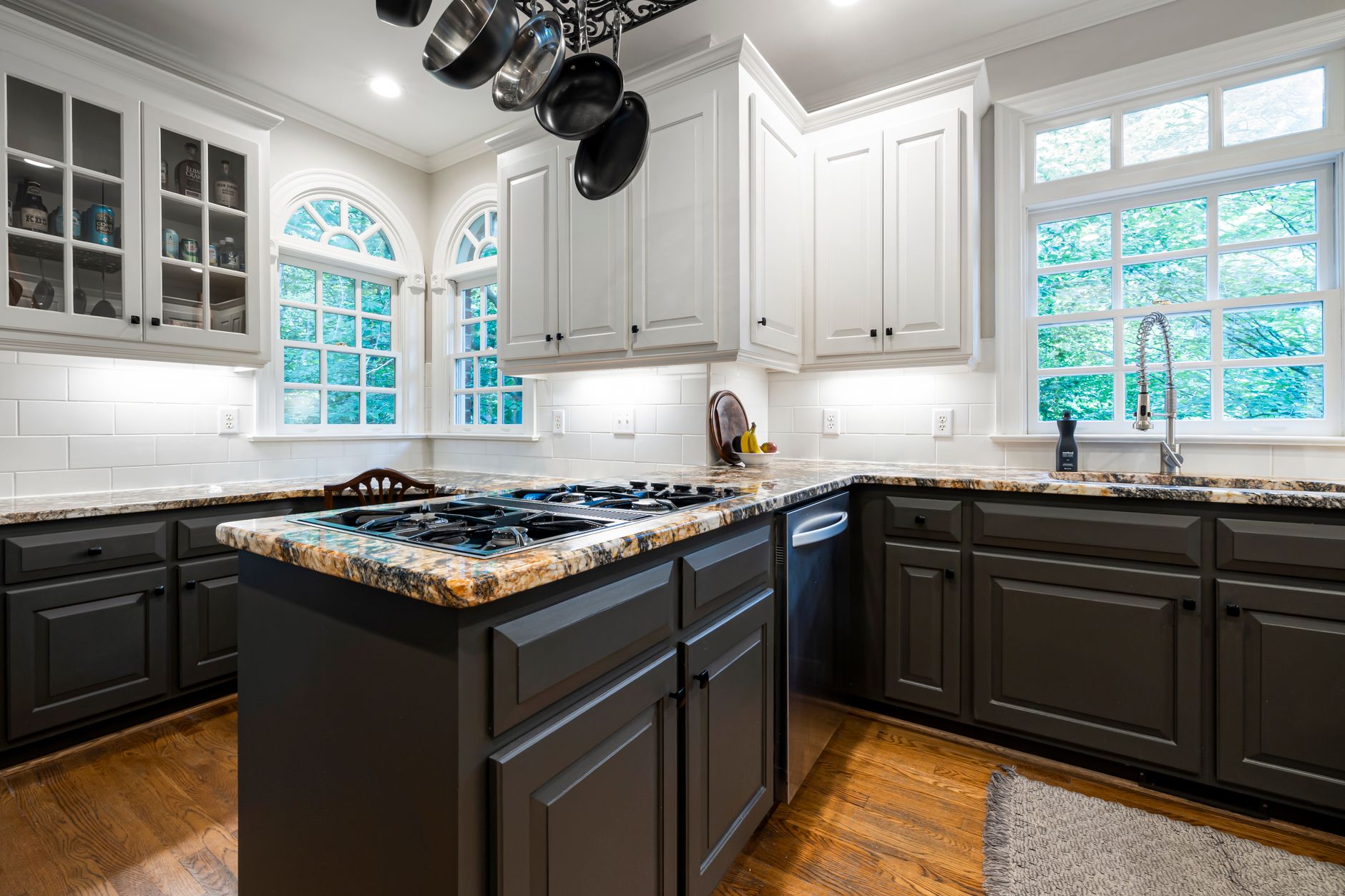
Cabinet refinishing cost in San Diego varies by scope, substrate condition, and number of units. Here are the ranges for commercial work in 2026. These numbers assume MDF or solid-wood face frames, not particleboard that has swollen from water damage — see the “when not to” section for that case.
| Scope | What's included | Per linear foot |
|---|---|---|
| Cabinet painting | Prep, prime, 2 spray finish coats, hardware reinstall | $40–$65 |
| Full refinish | Strip, sand, fill, prime, 2 spray coats, hardware reinstall | $65–$95 |
| Refinish + reface | New doors + fronts on existing boxes, spray finish | $110–$160 |
| Cabinet replacement | Remove old, supply + install semi-custom cabinets | $280–$550 |
For reference, a commercial break room with 15 linear feet of cabinetry runs $600–$975 for a full refinish. A 30-linear-foot office kitchen runs $1,950–$2,850. Volume projects — multiple units in the same building — typically come in at the lower end of these ranges because mobilization and material setup costs are spread across more work.
What drives cabinet refinishing cost up
- Multiple existing finish layers requiring chemical stripping rather than sanding
- Grease-saturated substrate (common in commercial kitchens) — requires chemical degreasing and additional prep time
- Significant damage to face frames or door edges requiring fill and feathering
- Two-part catalyzed finishes or conversion varnish (harder, more durable — correct for commercial kitchens and medical spaces)
- After-hours scheduling premium for occupied commercial spaces
- Custom color matching to an existing standard for multi-property consistency
What is not in a typical refinishing quote
New hardware is typically a separate line item. If the project requires plumbing or electrical moves to access the cabinet run, that is not part of a painting contractor's scope. And if the cabinet boxes need structural repair before finish work starts, that adds time and cost that should be scoped separately.
Cabinet refinishing vs. replacement — the math
For structurally sound commercial cabinets, the math on cabinet refinishing versus replacement is not particularly close. Here is a comparison for a break room scenario that comes up regularly in property management work.
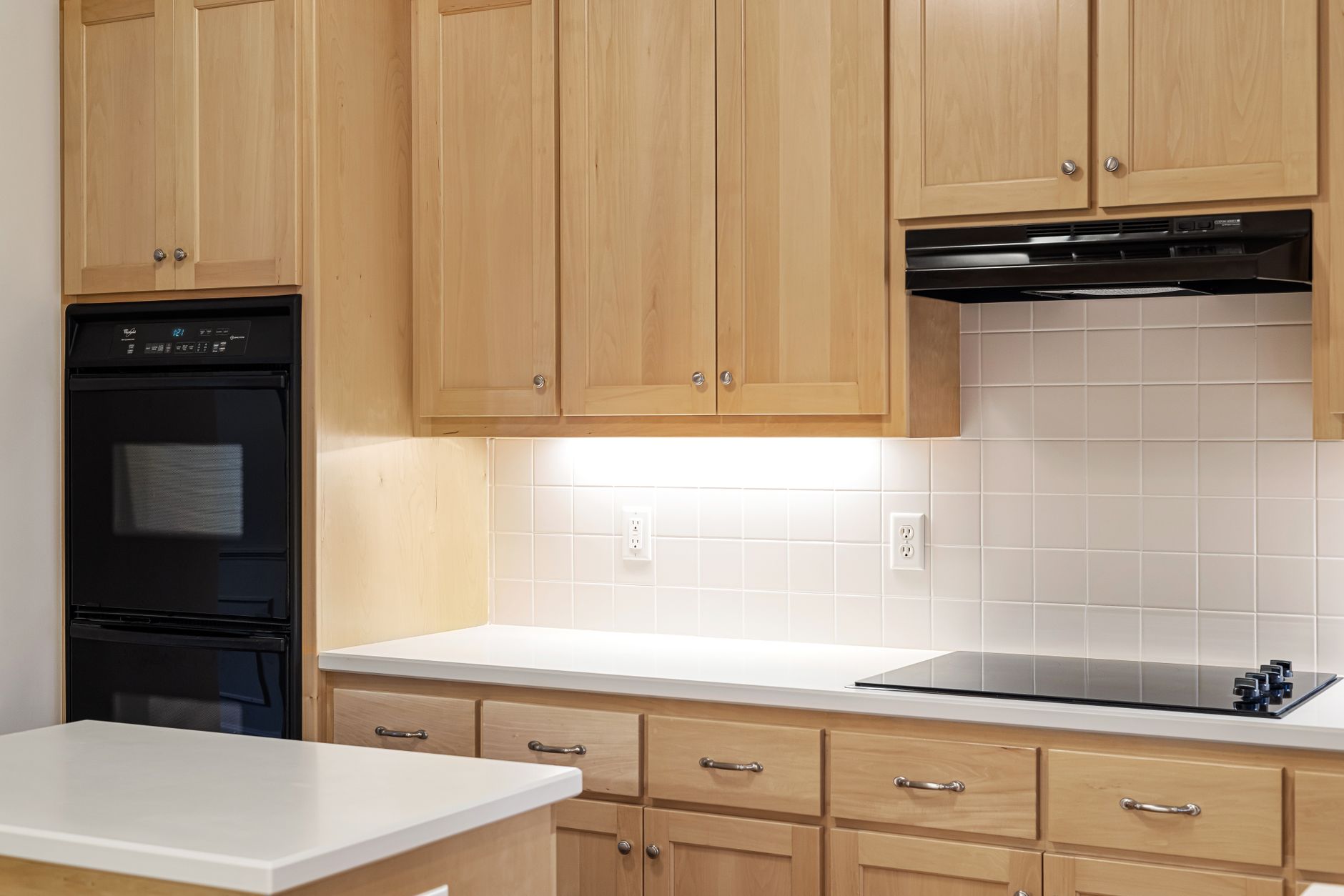
A break room with 18 linear feet of upper and lower cabinets, honey-oak finish, solid-wood face frames, no structural issues:
- Full professional refinish: $1,170–$1,710 (18 linear feet × $65–$95). The room looks current. Timeline: 2 days in, 1 day out of service.
- Cabinet replacement (semi-custom): $5,040–$9,900 (18 linear feet × $280–$550). New boxes, new doors, template, order lead time (typically 4–8 weeks in San Diego), installation. Timeline: room out of service for 2–3 weeks including lead time.
The refinishing option costs 20–35% of replacement and the room is back in service in 3 days, not 3 weeks. For a property manager operating a building where tenant satisfaction depends on functional amenities, the decision is usually not a financial question — it is whether the cabinets are structurally sound enough to hold a refinish. In most cases, they are.
The one argument for replacement that holds up: if you also need to reconfigure the layout, add pull-outs, or change the door style significantly, replacement makes more sense because refacing and refinishing preserve the existing footprint. If the cabinet layout works and the boxes are solid, refinish.
This is the position we hold on every quote we write. We do not push replacement when refinishing is the correct scope — and we will say the same thing if the situation is reversed.
Finish options for commercial cabinet painting in San Diego
The finish system matters more on commercial cabinets than residential ones. Commercial cabinets get wiped down daily, sometimes with cleaning products that would not touch a residential kitchen. The wrong topcoat shows fingerprints, softens from cleaning chemicals, and starts to look used within six months.
Waterborne alkyd (standard for most commercial work)
The most common choice for cabinet refinishing work in both commercial and residential applications. Waterborne alkyds spray well, level to a smooth surface, and are durable enough for most break room and office applications. They comply with California's CARB architectural coating regulations. Clean-up is water-based.
Conversion varnish
A two-part catalyzed finish that is significantly harder and more chemical-resistant than standard waterborne finishes. The correct choice for restaurant and commercial kitchen applications where the cabinets will encounter cooking grease, cleaning chemicals, and daily handling. Higher VOC content — requires the job to be scoped with CARB-compliant conversion varnish products. Costs more per square foot in materials and requires experience to apply correctly (the chemistry does not forgive slow application).
Two-part polyurethane
High durability, excellent abrasion resistance, and a hard surface that holds up to the daily wear of commercial use. Used on high-traffic applications — reception area cabinetry, nurse stations, point-of-sale millwork — where the surface needs to look the same in five years that it did on day one.
Sheen level for commercial applications
Satin (30–40° sheen) is the standard for most commercial cabinet work. It is cleanable, hides micro-scratches better than gloss, and reads as current in a way that flat or eggshell does not. Full gloss is appropriate for specific applications but shows every fingerprint and surface irregularity. Matte finishes are not typically specified for commercial cabinets — they are harder to clean and show wear faster than satin.
Low-VOC cabinet finishing in California — what the regulations actually require
California has the most restrictive architectural coating regulations in the country. The CARB Architectural Coatings Program sets VOC content limits for products sold in California, including cabinet finishes. For most waterborne and waterborne-alkyd finishes used in commercial cabinet refinishing, CARB limits are not a barrier — the products that replaced solvent-based lacquers over the past decade already comply.
Where it gets complicated is with higher-performance finishes. Conversion varnishes and two-part polyurethanes can exceed CARB limits in their standard formulations. A compliant California contractor working on low-VOC cabinet finishing in San Diego will specify CARB-compliant versions of these products — which exist and perform at commercial standards — rather than non-compliant products from older formulations.
The EPA's indoor air quality guidance on VOCs is relevant if the commercial space will be occupied during or shortly after finishing. Even CARB-compliant products off-gas during the first 24–72 hours of cure. For occupied spaces, night scheduling and adequate ventilation are not optional additions to the scope — they are part of a correctly designed job.
When vetting a cabinet finishing contractor in San Diego, ask specifically which product system they are quoting and whether it is CARB-compliant. A contractor who cannot answer that question clearly is either using older-formulation products or does not track the regulatory side of the work. Either is a flag.
How commercial cabinet refinishing works — prep to walkthrough

The difference between a cabinet refinishing job that holds for two years and one that holds for ten is almost entirely in what happens before the spray gun comes out. Here is what a correctly scoped commercial job looks like.
- Site assessment and scope definition. Condition of the existing finish, substrate material, access constraints (occupied space, shared ventilation, HOA rules on working hours), and finish system selection. This sets the quote — not a generic per-door estimate from a form.
- Remove hardware and doors. Doors and drawer fronts come off and are finished flat — on saw-horses or in a controlled finishing area. Finishing horizontal is how you get a level surface. Finishing cabinet doors vertically in place produces runs and uneven sheen.
- Degrease and clean. Commercial kitchen cabinets require chemical degreasing before sanding. Grease ground into the surface during sanding contaminates the finish system. Kitchen cabinets that have not been properly degreased before sanding will show adhesion failure, usually within the first year.
- Strip or sand existing finish. Painting over an existing finish gets one or two additional layers maximum before total film thickness creates adhesion problems. At that point, chemical strip is the correct call, not another coat.
- Fill and repair surface defects. Dings, holes from old hardware, veneer chips, and edge damage. Fill material is matched to the substrate and the expected movement of the finished piece.
- Prime. Adhesion primer matched to substrate and topcoat chemistry. On MDF edges (which are porous and absorb finish quickly), two primer coats before sanding to a sealed surface. Unsealed MDF edges under a finish coat look darker and duller than the face — a prep skip, not a product problem.
- Sand between coats. 220–320 grit between each coat, dust removed completely before the next application. Finish coats applied over dust create a sandpaper surface. Sanding between coats is what makes a finish look sprayed, not brushed.
- Apply finish system. Spray application, 2–3 coats depending on the system. Each coat applied within its recoat window.
- Reinstall hardware and doors. Check alignment, adjust hinges, confirm all drawer fronts are level. Commercial jobs get hardware reinstalled and cabinets checked functionally before the walkthrough — not left for the client to discover a door that does not close.
- Walkthrough. Joe or Alex walks every cabinet face, every door edge, every section of the job. If something is not right, it gets fixed before we leave. Commercial clients with occupied spaces do not want a callback two weeks later — they need the job signed off the day it is done.
When commercial cabinet refinishing is not the right call
This section costs us jobs sometimes. We write it anyway because the alternative is taking a project, refinishing cabinets that should have been replaced, and having a property manager call us in 18 months when the finish fails on a compromised substrate.
Water-damaged particleboard substrate
Particleboard that has been exposed to sustained moisture swells, and that swelling does not reverse when the board dries. The surface becomes uneven, the edges delaminate, and no amount of fill and primer creates a flat, stable surface. A finish applied over swollen particleboard will look acceptable for 6–12 months, then start showing the substrate movement through the topcoat. The correct answer is replacement of those specific boxes, not refinishing.
Extensive delamination on door faces
Thermofoil or vinyl-wrapped cabinet doors that have started to peel at the edges cannot be refinished reliably. The film peels further under any mechanical or chemical prep process. Options are either stripping the film entirely and refinishing the MDF substrate (possible if the MDF is sound) or replacing the doors. We scope these case-by-case.
When the layout needs to change
If the project also requires moving a cabinet run, adding pull-outs, or reconfiguring the upper section, the added cost of custom millwork can close the gap between refinishing and replacement. Refinishing preserves the existing layout. If the layout is the problem, replacement is the answer.
Structural damage to the box
A cabinet box with a broken back panel, collapsed shelf supports, or compromised joinery needs carpentry work before any finish work starts — or replacement if the carpentry cost approaches replacement cost. We will tell you which it is when we do the assessment.
If you are not sure which category your cabinets fall into, the right move is an in-person assessment. We do free on-site estimates across San Diego County. If the cabinets are not refinishing candidates, we will say that directly instead of taking the job and having it fail.
For interior painting and commercial painting in the same space, we coordinate cabinet refinishing with wall and trim work on the same project schedule when the scope requires it — one contractor, one walkthrough.
FAQ
How much does commercial cabinet refinishing cost in San Diego?
$40–$95 per linear foot for professional commercial work in San Diego, depending on scope. A break room with 15 linear feet of cabinetry runs $600–$1,425 for a full refinish. Volume projects (multiple units in the same building) typically come in at the lower end of the range.
Is cabinet refinishing worth it for commercial property?
For structurally sound cabinets, yes — refinishing costs roughly 20–35% of replacement, takes 2–3 days instead of 2–3 weeks, and produces a result that lasts 8–12 years with proper finish selection. It is not worth it on water-damaged particleboard, delaminating thermofoil doors, or when the cabinet layout needs to change.
What is the difference between cabinet painting and cabinet refinishing?
Cabinet painting is prep, prime, and topcoat on an existing finish in sound condition. Cabinet refinishing involves stripping the existing finish before applying the new system. Refinishing is the correct scope when the existing surface has multiple paint layers, is peeling, or is contaminated. Painting costs less but only makes sense on surfaces in sound condition.
Can you refinish kitchen cabinets in an occupied commercial kitchen?
Yes, with proper scheduling. Most commercial kitchen refinishing is done at night or during a planned closure. A professionally applied waterborne or catalyzed finish off-gasses primarily in the first 24–48 hours — the kitchen can be back in service within that window if the scope is planned correctly from the start. We schedule occupied commercial spaces with this in mind.
Do you do HOA and property management cabinet refinishing projects?
Yes. HOA cabinet refinishing and property management cabinet refinishing make up a significant portion of our commercial work in San Diego County. Multi-unit volume projects get consistent color matching, the same crew across all units, and documentation of materials and colors used for future reference. See our commercial partners page for examples of the type of work we do.
What finish do you use for commercial cabinet refinishing?
For most commercial applications, a waterborne alkyd or waterborne polyurethane topcoat — CARB-compliant, durable, and cleanable. For commercial kitchens or medical facilities, we specify a catalyzed conversion varnish or two-part polyurethane for added chemical and abrasion resistance. The finish system is always selected based on the use case, not just the budget.
How long does cabinet refinishing last on commercial cabinets?
8–12 years on a correctly prepped substrate with the right finish system for the application. Commercial kitchen cabinets with a catalyzed finish regularly hit 10 years before needing attention. The number one predictor of lifespan is substrate condition and prep quality — not the brand of finish used.
Do you match existing colors for multi-unit refinishing projects?
Yes. We pull color samples from an existing unit, match the formula in the finish product of choice, and apply consistently across all units. On larger property management projects, we document the color formula and product specifications — so if a unit needs touch-up work three years later, the color is not a guessing game.
Penney's Professional Painting — commercial cabinet refinishing, interior painting, and specialty coatings across San Diego County since 2007.
We will tell you whether the cabinets are refinishing candidates before we quote anything.
Walk the job with Joe or Alex.
Tell us what you're thinking. We'll come look, point out what we'd do differently, and only quote what we'd paint in our own house.