
Are Epoxy Floors Slippery? Living With an Epoxy Garage Floor
Joe Penney has been painting in San Diego County since 2007 and in the trade for over 35 years. Every job — residential, commercial, and specialty coatings — is run by Joe or his son Alex personally. No subcontractors, no franchise crews. CA License #794402-C33.

Quick answer
Yes — a high-gloss epoxy floor is slippery when it is wet. Anyone who tells you otherwise is selling you something. Dry, it has reasonable grip. Wet, it does not, because the cured film is hard and non-porous, so water and oil sit on top instead of soaking in and there is nothing for a shoe or tire to key into. That is a solved problem rather than a flaw: anti-slip aggregate broadcast into the topcoat during installation gives the surface texture. The catch is that grip and cleanability pull in opposite directions, and that trade-off is the real decision.
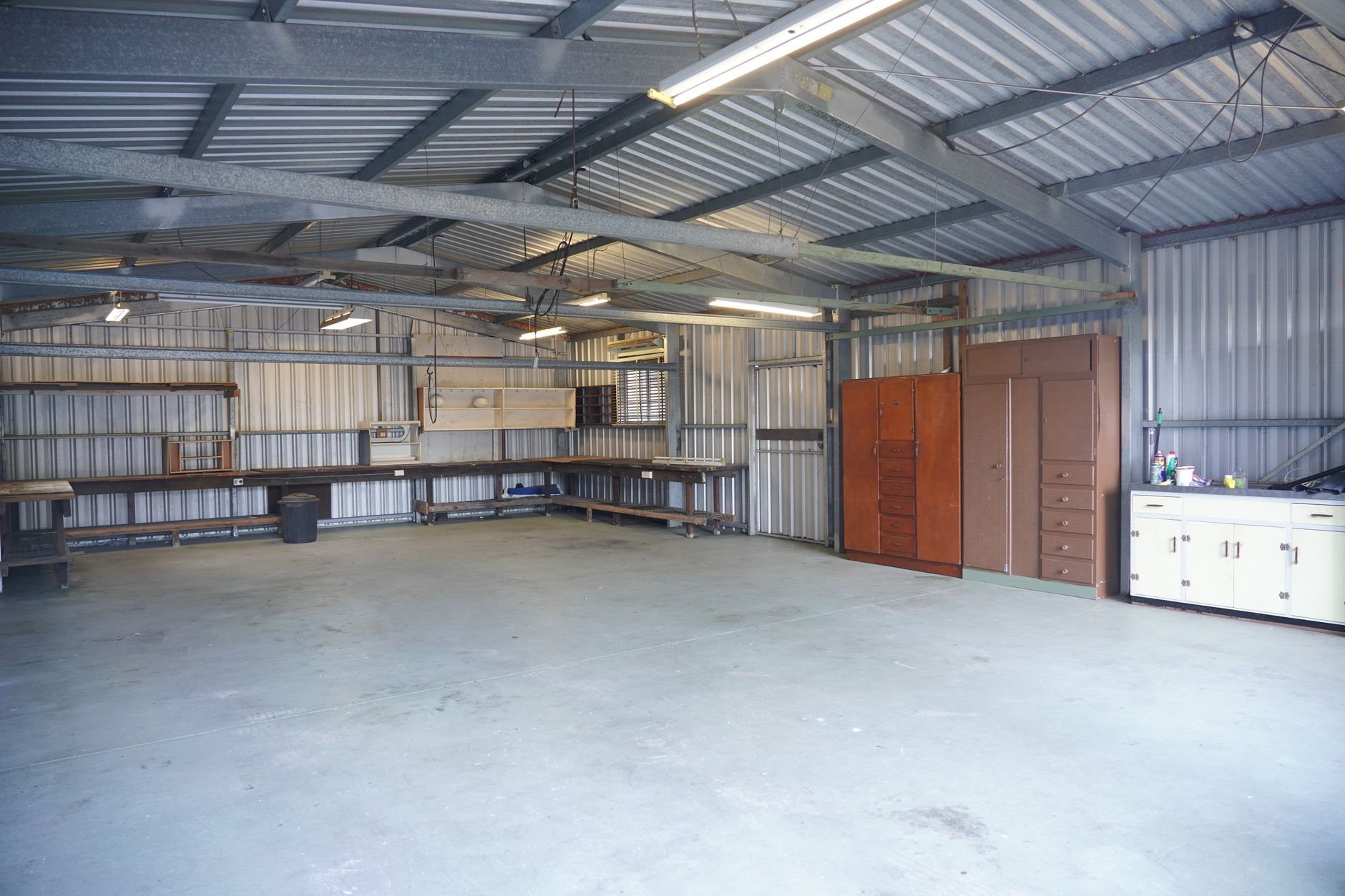
An epoxy garage floor is the only thing we install that people text photographs of to their friends. It comes out flat, bright and glossy, the car looks better parked on it, and for about three weeks the garage is the nicest room in the house. Then it rains, somebody backs a wet car in, walks around the hood in smooth-soled shoes, and discovers that a mirror finish behaves exactly like a mirror finish. The floor did not betray anybody. Nobody told them what to ask for.
So this guide is about living with the floor rather than buying it: whether epoxy is slippery and why, what anti-slip additives do and what they cost you in cleanability, where grip earns its keep here, how to clean the thing without dulling it, what damages it, and what is involved if you ever want it gone. What it costs and how long it lasts are covered in our full guide to epoxy garage floors — this one picks up after the truck leaves. We have been coating floors across San Diego County since 2007 out of La Mesa, with 35+ years in the trade behind the crew, CA License #794402-C33, and zero subcontractors, so the person who specs your finish is the person who broadcasts the aggregate.
Are epoxy floors slippery? The honest answer
Yes, when wet. A high-gloss epoxy floor with no anti-slip aggregate in the topcoat is genuinely slick under standing water, and it is the most common complaint we hear from people whose installer never raised the subject. Pretending otherwise is how a contractor loses a customer for the life of the floor, so we say it in the driveway before we quote.
Dry, the same floor is fine. Walk across a cured, clean, dry epoxy floor in normal shoes and it feels like what it is — a hard, sealed surface with grip comparable to sealed concrete. The problem is binary rather than gradual: the surface is acceptable right up until there is a film of water, oil or coolant on it, and then it changes character completely.
Three things make it worse, and they stack. Higher gloss is slicker than satin, because the resin chemistry that reflects light cleanly has the least surface texture. Oil is far worse than water, because it does not evaporate. And smooth-soled shoes on a wet gloss floor are the combination that puts people on the ground.
None of this is inherent to epoxy. It is a property of the finish you chose, and the finish is specified, not fated — slip resistance is a design input the same way sheen is on a wall. Specifiers who need a measured number reach for ASTM test methods such as D2047 to compare floor finishes. In a residential garage nobody is testing anything, so the decision falls to whoever is holding the squeegee.
Why a cured epoxy floor is slippery when wet
Because the cured film is a closed, non-porous surface and water cannot get into it. That is the entire mechanism, and understanding it tells you everything about how to fix it.
Bare concrete is porous, so when water lands on it some goes down into the slab and what is left sits in a landscape of fine aggregate and tooling marks. A shoe sole pressed onto damp concrete finds high points to bear on and low points for the water to escape into, so there is still real contact between rubber and stone.
A cured epoxy topcoat is the opposite. The resin self-levels into a continuous film, cross-links into something hard, and is non-porous by design — the whole reason it keeps oil out of your concrete. So nothing soaks in and nothing drains. The water forms a thin continuous layer between shoe and floor, the shoe hydroplanes on it, and there is no texture underneath for the rubber to key into. An unmodified gloss epoxy floor has no mechanical grip at all; what grip it has dry is friction between two smooth surfaces, and a film of liquid removes that.
Oil behaves the same way and then refuses to leave. Water evaporates off a garage floor in a San Diego afternoon; a quarter-sized drip of motor oil spreads into a wide, invisible, permanently slick patch that a gloss floor hides well, because both reflect light the same way. That is the version that actually hurts people.
One clarification: this has nothing to do with cure. A floor still curing is soft and easily marked, a separate issue covered in our guide to how long paint takes to dry versus cure. A fully cured floor is as hard as it will ever get, and it is still slippery wet. Waiting longer does not add grip.
How it gets fixed: anti-slip additives and broadcast aggregate
You give the surface texture on purpose. A gritty additive is broadcast into the topcoat while it is still wet, so the cured resin locks thousands of hard particles into the film with their tops standing proud of the surface. Those high points are what a wet shoe sole or tire keys into — the grip tape on a stair nosing, at a finer scale. Four approaches, and they are not interchangeable.
| Additive | How it feels and behaves | Where it belongs |
|---|---|---|
| Fine silica or quartz sand | The mildest texture — a faint tooth you notice barefoot but not in shoes | Whole-floor residential garages where looks still matter |
| Aluminum oxide | Harder and sharper than silica, holds its edge far longer under traffic | Thresholds, ramps, walkways, anywhere tires turn |
| Polymer grit | Softer and rounder underfoot, kinder to bare feet and knees | Garages used as gyms, laundry zones, around a utility sink |
| Vinyl flake (decorative) | Chips broadcast for looks; the chip edges add texture as a side effect | People who wanted the flake look anyway and get some grip free |
Vinyl flake is the interesting case, because most people choose it for appearance and get the grip as a bonus. The colored chips broadcast into the base coat have thickness, so the topcoat bridges over thousands of chip edges rather than pooling dead flat — noticeably more tooth than a plain gloss coat without anybody asking for grit. Which system suits your slab is the subject of our epoxy garage floor guide; what matters here is that every one of them can carry grit.
Here is the opinion we will argue with anyone about: the grip specification matters more than the color, and almost everybody spends their thinking on the color. The mechanism is timing. Color is a choice between two swatches that both look good. Aggregate has to be broadcast while the resin is still wet, inside the working window, so it is decided in a few minutes on installation day and locked into a cured film for the life of the floor. You can live with a color you have gone cool on. You cannot add grip to a finished floor without scuffing it and applying another topcoat — a second mobilization, more downtime, and a job you already paid to have done once.

The trade-off nobody mentions: grip versus cleanability
More grip means a rougher floor, and a rougher floor is harder to clean and holds more dirt. That is the honest trade, it is unavoidable, and any contractor who tells you otherwise has not mopped enough floors.
It is the same mechanism read backwards. Grip comes from thousands of hard points standing above the film with valleys between them, and those valleys are where dust, brake dust and dried soap collect. A dead-flat gloss floor is a squeegee-and-done surface. A heavily aggregated floor wants more water, more passes and a stiff brush instead of a soft mop.
So the specification is a dial, not a switch, and we set it by zone. Grit goes heavy where feet land on water — the threshold, the walkway along the driver's side, any slope, around a utility sink. It goes light or stays off in the middle of the bay under the car, where nobody walks and where you want to wipe up a drip in one pass. A well-specified garage floor is gritty where you stand and smooth where you clean.
A second cost, before you ask for the grippiest floor available: coarse aggregate is unkind to bare skin, so people who run a garage gym barefoot or spend time on a creeper end up happier with a rounder polymer grit at a moderate rate.
Where slip actually matters in a San Diego garage
Four places, and not spread evenly across the slab. Water arrives in specific spots, and that is where the grip belongs.
- The entry threshold. Cars drag rainwater in on four tires and drip for an hour afterward, so the first several feet inside the door are wet while the rest of the floor is bone dry — and that is the strip everybody walks on. Aggregate goes here first.
- The walkway beside the car. A narrow San Diego garage leaves a strip between the car door and the wall, walked a dozen times a day with hands full, and water off the car body lands there.
- Around a utility sink, washer or water heater. Where plumbing meets a coated floor, assume it gets wet with somebody standing there.
- Coastal garages where the marine layer condenses. The local cause nobody expects. A slab holds its temperature while the air above it does not, so humid marine air moving inland over a cold slab overnight condenses onto the floor. On bare concrete it soaks in unnoticed; on a non-porous epoxy floor it beads on top. That is why in Encinitas, Del Mar and Coronado people find a damp floor on a June morning with no leak to blame — the National Weather Service San Diego office tracks the layer that does it.
Then the genuinely dangerous case: a sloped driveway apron running into a coated floor. Plenty of San Diego lots sit on a grade, so the apron drops toward the garage and rain runs onto the slab. Now the smooth wet surface is also tilted, the geometry that turns a stumble into a fall. Treat that first stretch as a wet ramp. The OSHA guidance on walking and working surfaces is written for workplaces, but the ranking holds in a garage: wet plus sloped plus smooth is what puts people on the ground.
The broader local point: San Diego garages are not just car parks. The climate lets people use them year-round as gyms, workshops and laundry rooms, so a floor here gets walked on, knelt on and dripped on far more than one in a place where the room is unusable half the year. So we spec epoxy garage floor systems around how the room is used rather than how it photographs.
How to clean an epoxy floor, and what to keep away from it
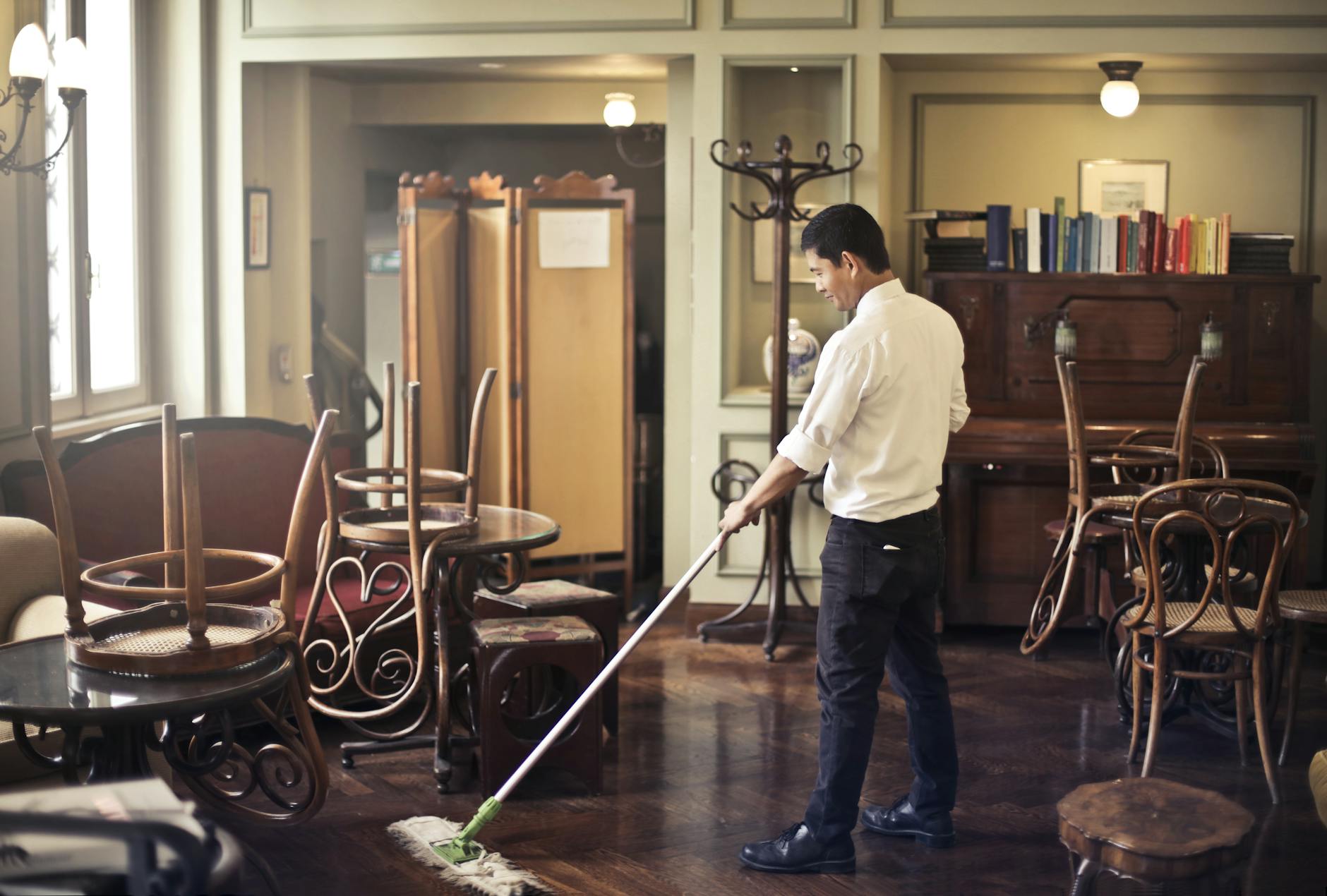
Sweep it, and wet mop it with warm water and a mild detergent. That is the whole maintenance program for a residential epoxy floor. The rest is detail.
Routine, weekly. A dust mop or a soft broom, more often than you think. Grit is what actually wears a coating out — fine sand underfoot and under tires acts as an abrasive and polishes a gloss finish dull along the traffic lanes. Sweeping is not cosmetic. It is the maintenance.
Wet cleaning, monthly or as needed. Warm water with a little pH-neutral or mild detergent — dish soap works — and a soft microfiber mop or foam squeegee. Rinse afterward, because dried detergent leaves a film that dulls the gloss and makes the floor slicker than the coating itself. On an aggregated floor use a soft-bristle deck brush rather than a string mop, whose fiber catches in the texture.
What to keep off it. Harsh solvents strip and soften the resin. Abrasive pads, steel wool and scouring powder scratch the gloss permanently, worst on dark colors. Citrus and pine-based cleaners carry solvent action you do not want on a coating. And do not use vinegar or any acidic cleaner on an epoxy floor. That is the mistake we see most, because vinegar has a reputation as the harmless household cleaner, and on a resin floor it is not: repeated acidic cleaning etches and dulls the topcoat in exactly the pattern you mopped. The same goes for acid-based concrete and rust removers.
The three specific messes. Oil drips come up with a paper towel and a mild degreaser, and the reason to do it the same day is not the stain — an oil film is the slipperiest thing that will ever be on your floor. Brake dust is a fine metallic grit that collects in front of the wheels and behaves like sandpaper if traffic grinds it in. And hot tire pickup: tires that get hot on the road stay soft when parked, and on an under-cured or poorly bonded coating they can lift it off in patches — not an issue on a properly prepped system, and prep is the variable that decides it. No cleaning product fixes a dulled or yellowed floor, which is the next section.
What actually damages an epoxy floor
Dragging things, dropping things, and battery acid. Almost everything that ruins a residential epoxy floor is mechanical and happens in a second, which means the floor is mostly in your hands.
Dragging is the big one. Jack stands, floor jacks, engine hoists, rolling toolboxes, metal shelving pushed across the bay. A hard steel edge under load does not scratch an epoxy floor so much as plow it, and the gouge goes through the topcoat into the color coat where it shows as a pale line. Lift rather than slide, put plywood under anything with a narrow metal foot, and keep the toolbox casters clean, because one piece of trapped grit turns a wheel into a cutter.
Dropped tools. A cured epoxy film is hard, and hard means it chips rather than dents. Drop a breaker bar or a transmission pan corner and you can take a chip out of the coating. It does not spread on its own, but moisture can get into the exposed concrete, so chips in a garage that gets wet are worth touching up.
Battery acid. Epoxy resists what a garage normally holds: gasoline, oil, brake fluid, coolant, most solvents in the quantities you spill. Battery acid is the exception, because a lead-acid battery left to leak will bleach and soften the film and etch the slab below. Keep the battery in a tray, and neutralize and rinse a spill immediately rather than wiping it around.
UV through an open door. The one that happens with nobody touching the floor. Epoxy formulations are not UV-stable — prolonged ultraviolet exposure yellows them, chalks them and fades the color — so a west-facing bay left open through the afternoon shifts color over the years, showing up as a tan line where the door's shadow fell. That is decided at specification with a UV-stable topcoat, which is why we ask how you use the room before picking one.

How to remove an epoxy floor — and why recoating usually wins
Removal means grinding. There is no solvent you pour on a cured epoxy floor that lifts it and no peel-up method: a floor grinder with diamond tooling and a shot blaster take the coating off mechanically, along with a skim of the concrete underneath. Chemical strippers exist and are miserable work on a whole floor — slow, smelly, and they still leave you grinding the residue.
It is also loud and dusty. A grinder in an enclosed garage is a serious noise source and generates silica dust, which is why the job runs with a vacuum shroud and a HEPA extractor rather than a broom. A tightly bonded professional system takes far longer to remove than a failing DIY kit that is already lifting.
So the honest advice is that if the existing floor is sound, do not remove it. A coating that is well bonded, with no hollow spots and no peeling, is a legitimate substrate: abrade the surface to give the new material something to bite, repair the gouges, and apply a new topcoat. That turns a demolition into a much shorter job and is how a floor that has dulled or lost its grip gets fixed.
Removal is the right call in three situations, and you can usually tell which by looking. If the coating is delaminating — peeling, flaking, hollow underfoot — it has to come off, because nothing laid over a failing bond will stay. If the slab has an active moisture problem pushing the coating off, the moisture comes first; our epoxy garage floor guide covers the testing. And if you are moving to a system with different thickness and bonding requirements, start from bare concrete. Short of that, recoating wins — and choosing between a floor paint and a true epoxy system for the recoat is its own decision.
When you should not choose a high-gloss epoxy floor
This section costs us work and we write it anyway. Five cases where the glossy floor in the photograph is wrong.
- Do not choose high gloss for a garage that doubles as a gym or a workshop. The most common mismatch in San Diego, because the climate means half the garages here are a second room. If people will be sweating, dropping weights or working on their knees, a satin finish with polymer grit is right. You give up shine and get a floor you can use.
- Do not add so much grit that you cannot clean it. People who read one article about slip resistance ask for the maximum aggregate available, then fight a floor that traps dust and eats mop fiber. Grip is a dial: heavy where water lands, light where you clean, never maximum everywhere.
- Do not use vinegar or any acidic cleaner on it. Including the day there is nothing else under the sink. Repeated acidic cleaning dulls the topcoat, and the fix is a recoat rather than a polish.
- Do not coat a slab with an active moisture problem. If water is moving up through the concrete, a non-porous coating traps it under the film and the floor pushes itself off, however good the prep was. That needs testing first, covered in the epoxy garage floor guide.
- Do not hire us if you have already settled on mirror gloss, no grit, for a sloped garage you use as a gym. We will say what we think once, and if the answer is still a bare gloss floor on a wet slope, that is a floor we would rather somebody else installed. Our post on when not to hire a painter goes further.
The short version: yes, a gloss epoxy floor is slippery wet, because a non-porous film gives a shoe nothing to key into — fixed with aggregate broadcast into the topcoat on installation day, at the cost of a surface that takes more work to clean. Sweep it, mop with warm water and mild detergent, keep vinegar and abrasives away, lift rather than drag. For questions about grip, finish or maintenance on any epoxy garage floor or other coating work in San Diego County — La Mesa out to the coast — call us. No forms, no hold music — Joe or Alex on the line, since 2007.
FAQ
Can you add an anti-slip additive to an epoxy floor that is already installed?
Not into the existing film, no. Aggregate has to be broadcast into the topcoat while the resin is still wet so it cures locked in place, and once the floor has cured there is nothing for new grit to bond to. What you can do is add another topcoat: abrade the existing surface so the new material bites, then apply a fresh coat with the aggregate broadcast into it. That is a real job rather than a touch-up, but far less work than removal, and it is the usual fix for a floor that turned out slicker than expected.
Are flake epoxy floors less slippery than a plain gloss coat?
Usually yes, and it is a side effect rather than the point. A flake system broadcasts colored vinyl chips into the base coat, and those chips have thickness, so the clear topcoat bridges over thousands of chip edges instead of pooling dead flat. That leaves noticeably more tooth underfoot than a smooth gloss floor. It is not a substitute for proper aggregate in a genuinely wet area like a threshold or a sloped apron, but for a normal garage bay it is often enough, and it hides dust and tire marks better than a solid color.
What should I mop an epoxy garage floor with?
Warm water with a small amount of a pH-neutral or mild detergent, applied with a soft microfiber mop or a foam squeegee, then rinsed. Dish soap is fine. Rinsing matters, because dried detergent leaves a film that dulls the gloss and makes the floor slicker than the coating itself. On a floor with anti-slip aggregate in it, swap the mop for a soft-bristle deck brush — string mop fiber snags in the texture and leaves lint behind in the valleys.
Why is vinegar bad for an epoxy floor?
Because it is acidic, and repeated acidic cleaning etches a resin topcoat. Vinegar has a reputation as the harmless all-purpose household cleaner, which is exactly why it ends up on floors it should not touch. The damage is not dramatic on day one; it shows up over months as a gradual loss of gloss in the pattern you mopped, and once the finish is dulled the remedy is a recoat rather than a polish. The same caution applies to acid-based concrete and rust removers, which are formulated to attack cementitious surfaces.
Is a textured anti-slip floor harder to keep clean?
Yes, and anybody who says otherwise has not mopped one. Grip comes from hard particles standing above the film with valleys between them, and those valleys collect dust, brake dust and dried soap. A flat gloss floor is a squeegee-and-done surface; an aggregated floor wants more water, more passes and a stiff brush rather than a soft mop. The way to manage it is to specify grit by zone — heavy where water lands, light in the middle of the bay — instead of texturing the whole floor to the same level.
What can I do about the wet patch by the garage door in winter?
Expect it, and plan the floor around it. Cars drag rainwater in on four tires and drip for an hour after they park, so the first few feet inside the door are wet while the rest of the slab is dry, and that strip is where everybody walks. The fix is aggregate in the topcoat across the threshold zone, aluminum oxide if the driveway slopes toward the door. On an existing smooth floor, a ribbed rubber runner across the entry handles it until the floor is recoated.
Is removing an epoxy floor worth it, or should I recoat over it?
Recoat, unless the existing coating has failed. Removal means grinding with diamond tooling and a dust extractor — loud, dusty, slow, and it takes a skim of the concrete with it. If the old floor is well bonded with no peeling and no hollow spots, it is a legitimate substrate: abrade it, repair the chips, and apply a new topcoat. Grinding is the right call when the coating is delaminating, when the slab has an active moisture problem, or when you are moving to a system with different bonding requirements.
Will a gym mat or rubber flooring mark an epoxy floor?
It can, in two ways. Some rubber mats contain plasticizers and antioxidants that migrate out and leave a yellow or brown stain in the shape of the mat, which sits in the film rather than on it and does not clean off. And a mat laid on a floor that has not fully cured presses its own texture into the soft coating. Let the floor cure completely before anything goes down, lift mats periodically, and choose light-colored or cross-linked mats rather than cheap dark recycled rubber on a pale floor.
Penney's Professional Painting — epoxy garage floors, interior, and exterior painting across San Diego County since 2007. CA #794402-C33, bonded and insured, zero subcontractors.
Tell us how you actually use the garage — gym, shop, laundry, sloped driveway — and we will tell you which finish and which anti-slip aggregate belongs in which zone before we quote anything. Joe or Alex is on every job. Estimates are free.
Walk the job with Joe or Alex.
Tell us what you're thinking. We'll come look, point out what we'd do differently, and only quote what we'd paint in our own house.